

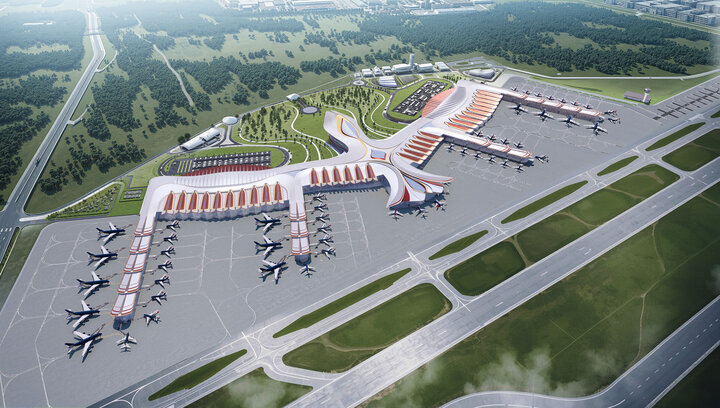






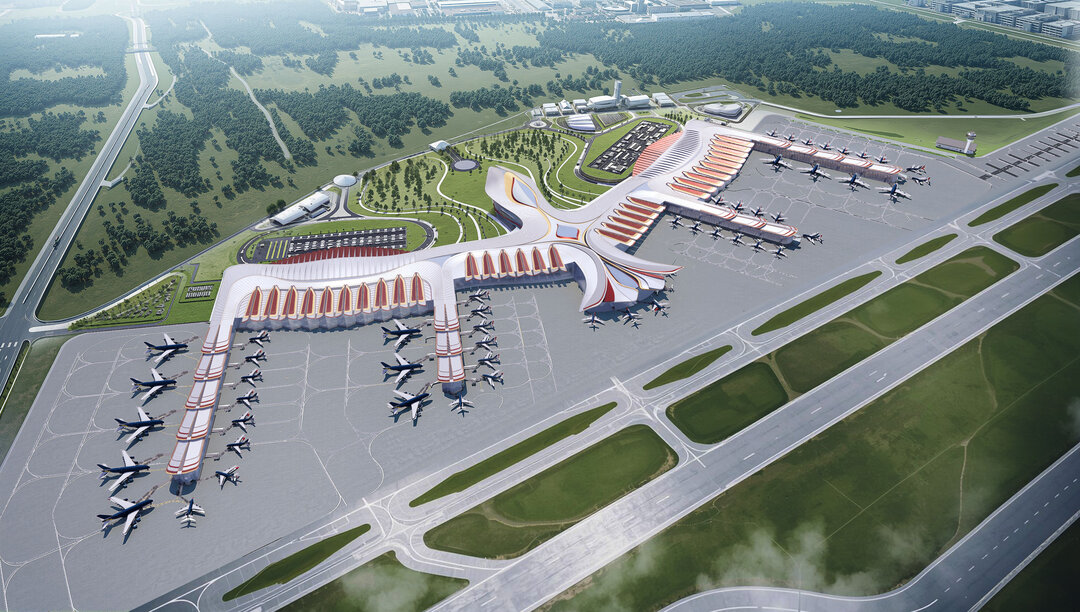
The Phu Quoc International Airport expansion project is designed by CPG Consultants and Artelia Airport, leading airport design firms based in Singapore and France. Targeting completion before APEC 2027 and with a total investment of nearly VND 22,000 billion, the airport is expected to offer a world-class, seamless, and intelligent experience, enhancing Phu Quoc's status as a destination from its "gateway".
Phu Quoc International Airport is also a highly iconic architectural project. The passenger terminal is designed with inspiration from the image of the Phoenix – a bird symbolizing royalty, power, and nobility. Besides the main passenger terminal, Phu Quoc is also investing in the construction of a VIP terminal designed by Italian architect Marco Casamonti, the "father" of the Kissing Bridge in Phu Quoc. Inspired by the image of the sea eagle – a symbol of freedom, grace, and harmony with nature.
To meet the target of welcoming 20 million passengers/year, the Total Airport Management (TAM) model will be implemented in Phu Quoc. This is a comprehensive solution integrating all airport operations, from the landside to the airside, from passenger and baggage management to flight coordination and security, optimizing operations, minimizing disruptions, improving efficiency, and enhancing passenger experience.
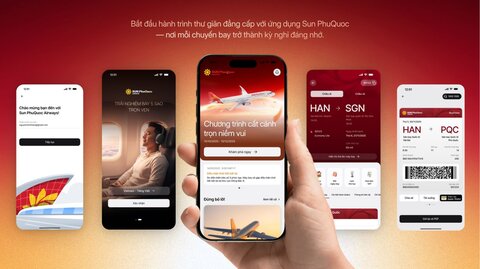
Passengers will be notified via display screens or mobile applications about queuing times, gate changes, etc., to avoid wasting waiting time. The airport can allocate additional personnel, open more counters, or adjust passenger flow based on real-time data, helping to reduce congestion. Pre-terminal transportation from buses, taxis, and pick-ups and drop-offs will also be smoothly coordinated, limiting ground-level congestion.
Passengers arriving and departing from Phu Quoc International Airport in the future will experience a seamless contactless journey, thanks to the integration of biometric technology at every touchpoint: from check-in, security screening, to boarding and automated baggage counters. Identity verification using only facial recognition or fingerprints increases processing speed to only 15-20 seconds/person, reducing queuing and ensuring personal information security.
Another breakthrough lies in the baggage handling system. For departing baggage, Phu Quoc will apply the Individual Carrier System (ICS), a modern baggage handling system where each bag is placed in a separate tray. This allows for 99.99% accurate tracking of each baggage item's journey, minimizing loss or delays.
For arriving baggage, the airport will use high-capacity inclined conveyors, integrating automatic scanning technology and warning tags for suspicious baggage. This not only speeds up processing but also helps reduce congestion at the exit gates, a common problem at many international airports today. Customs officers will not need to sit at each scanner as images will be sent to a central hub, reducing operational personnel.
Phu Quoc International Airport will be expanded to over 100 parking positions, including 71 positions directly connected to modern jet bridges. It will utilize an underground fuel delivery system at the parking position, instead of using traditional tanker trucks. This system is not only safer but also reduces emissions, noise, and turnaround time for each flight.
More than 20 arrival and departure baggage carousels will operate simultaneously. Thus, the airport will also be able to handle more flights simultaneously during peak hours, reducing late afternoon and night flights.
The expansion project, with its massive investment and cutting-edge technology, will put Phu Quoc International Airport on par with the world's most modern airports. This is a strategic move by Sun Group to upgrade tourism infrastructure, strongly connecting Phu Quoc with regional and international aviation hubs, contributing to making Phu Quoc a new tourism and economic center of the world in the future.