

Phu Quoc International Airport is entering an accelerated expansion phase, aiming for a capacity of 24 million passengers/year before APEC 2027 and 50 million passengers in the future, becoming one of the most modern airports in the world. To realize this goal, the passenger terminal is designed as an architectural icon and integrates the most advanced aviation technologies today.
The project involves international design units: CPG Consultants (Singapore) responsible for architecture and Artelia Airport (France) responsible for airport technology, while Aedas Interiors (Singapore) and HOK (USA) handle the interior.
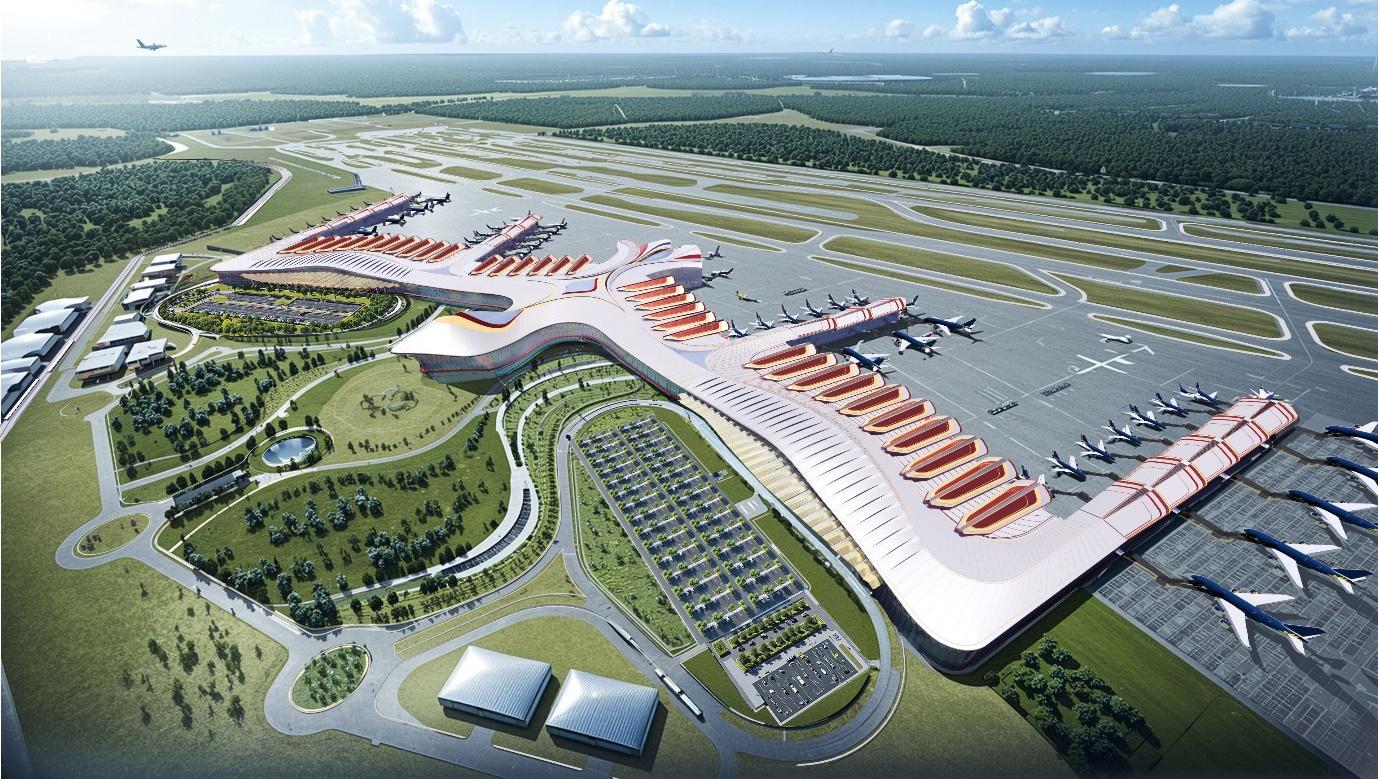
Design of Phu Quoc International Airport inspired by the image of the Phoenix bird. Photo: CPG Consultants Singapore.
Phoenix reborn in contemporary architecture
Inspired by the image of the fire Phoenix bird, a symbol of rebirth and prosperity in East Asian culture, Terminal T2 is shaped like wings spread wide between a jade sea and green forests. Notably, this design also symbolizes Vietnam's aspiration to rise in the new era.
At the arrival hall, Aedas tells the story of the Phoenix landing on the ocean. The soft curves not only evoke coral reefs or pristine beaches but also capture the essence of traditional craft villages: From the silhouette of fishing boats, green pepper, sim wine to sparkling pearls, all are subtly integrated, transforming the reception space into a warm, local welcome.
Meanwhile, the departure terminal, under the hands of HOK, shines with the spirit of the Phoenix taking flight, representing the aspiration for breakthrough and connection of modern Vietnam. The open space harnesses the vastness of the sky, combined with the undulating lines of Bai Sao, offering a resort-like experience akin to a 5-star hotel lounge.
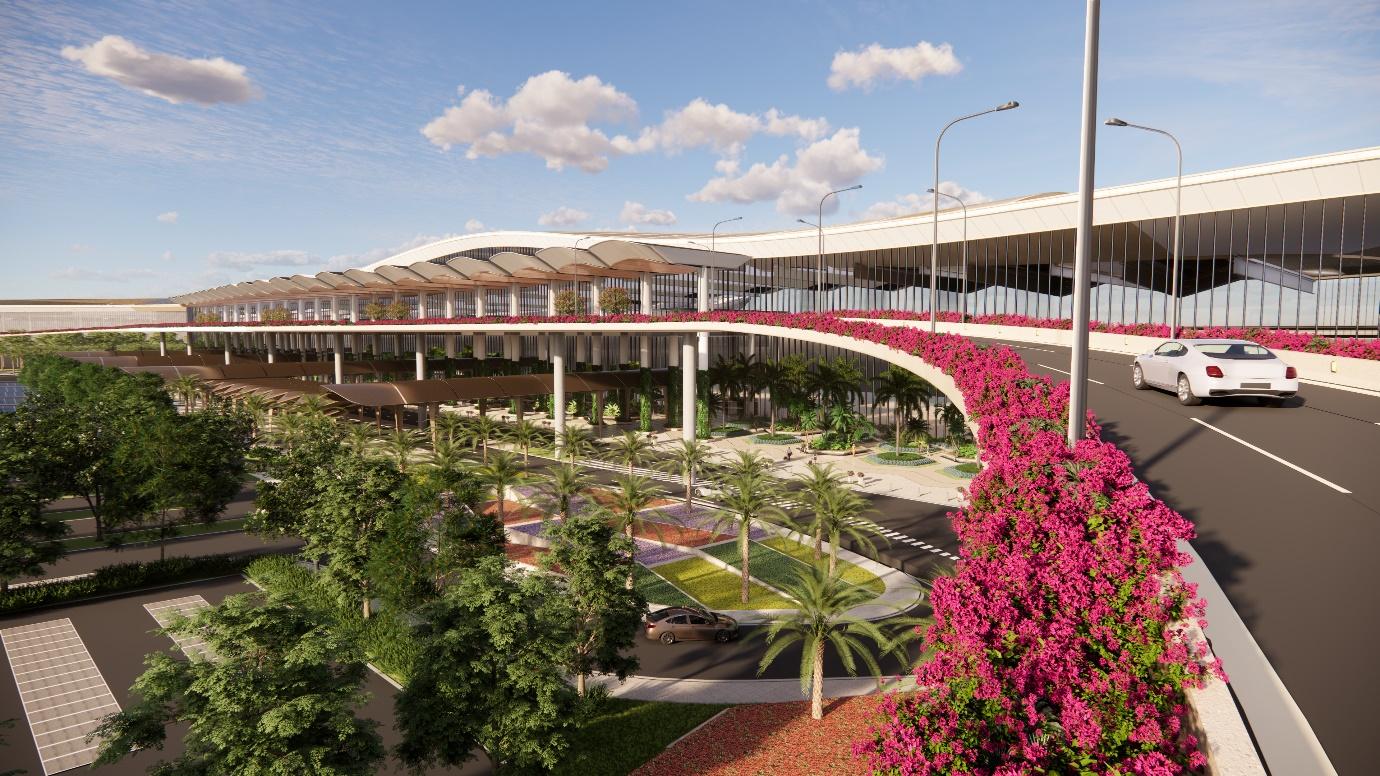
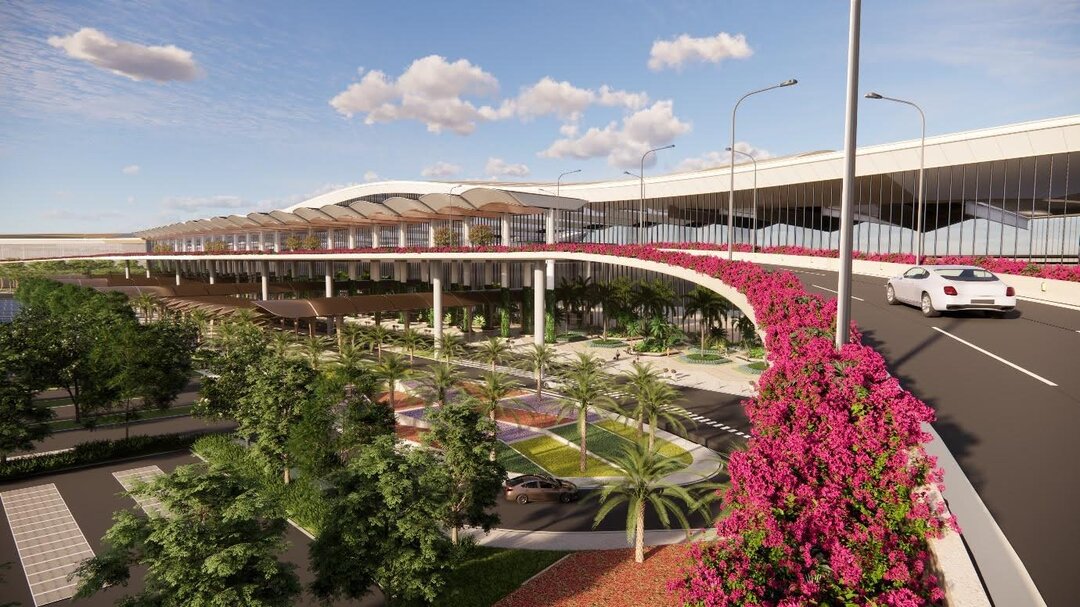
The landscape is enhanced with areas shaded by green trees and tropical flowers. Photo: CPG Consultants Singapore.
A spatial journey from ocean to sky
Upon entering the Arrival Hall, passengers will be immediately immersed in the ocean world. The floor surface features an asymmetrical pattern simulating wet sand and ocean currents, naturally guiding passengers from the immigration corridor to the queuing area without relying on rigid signage. The columns, reaching up to 14.5m, are shaped like giant coral branches, supporting a curved metal ceiling with a water-like effect that reflects light, creating the sensation of moving underwater.
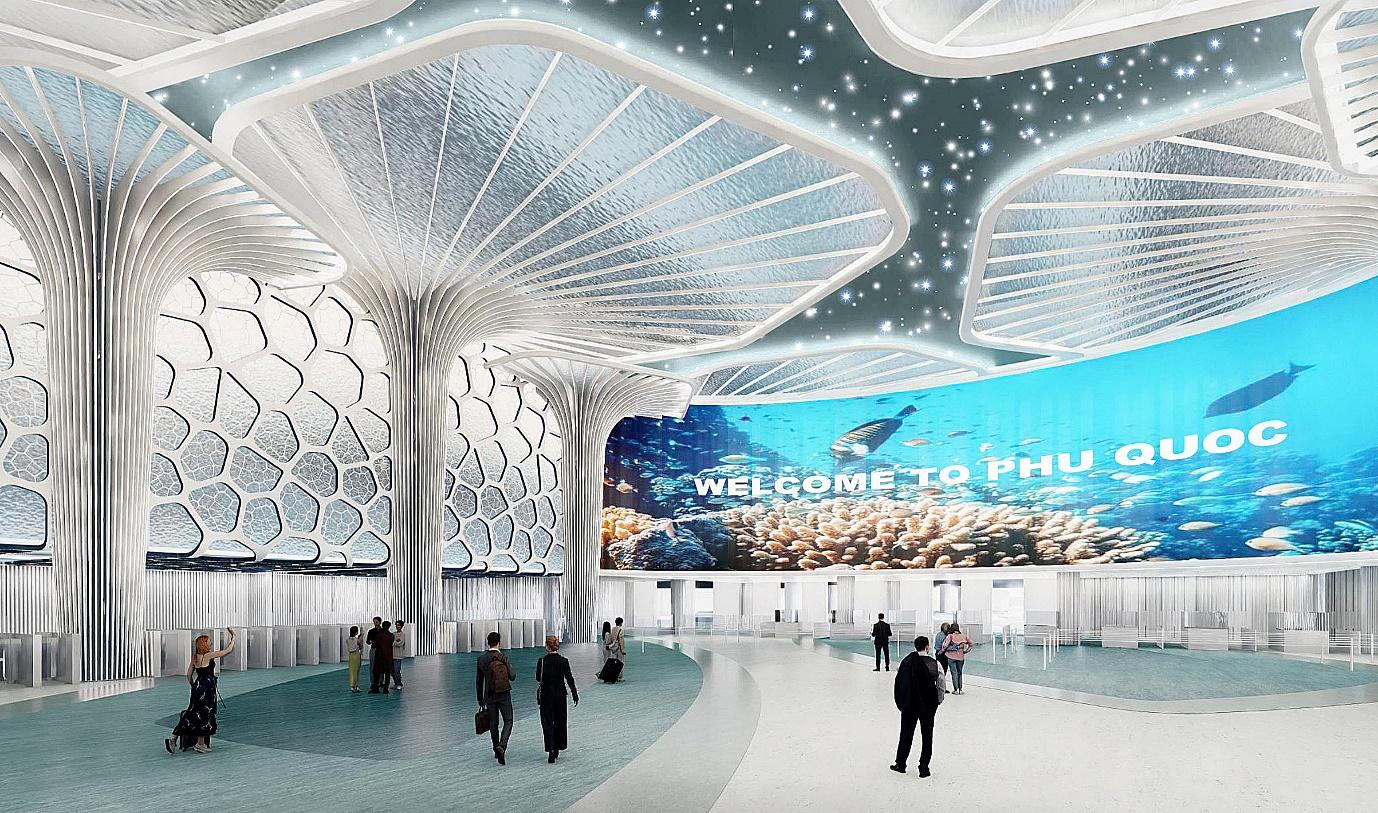
Impressive design resembling the underwater scenery at the arrival terminal area. Photo: Aedas Interiors
As you move deeper into the passport control area and waiting lounge, the color palette gradually shifts from the gentle blue hues of the deep sea to the most vibrant colors of coral reefs, bringing a state of relaxation after a long flight. Here, the terminal adds automated service counters, flexibly divided for all short-term and long-term stay needs.
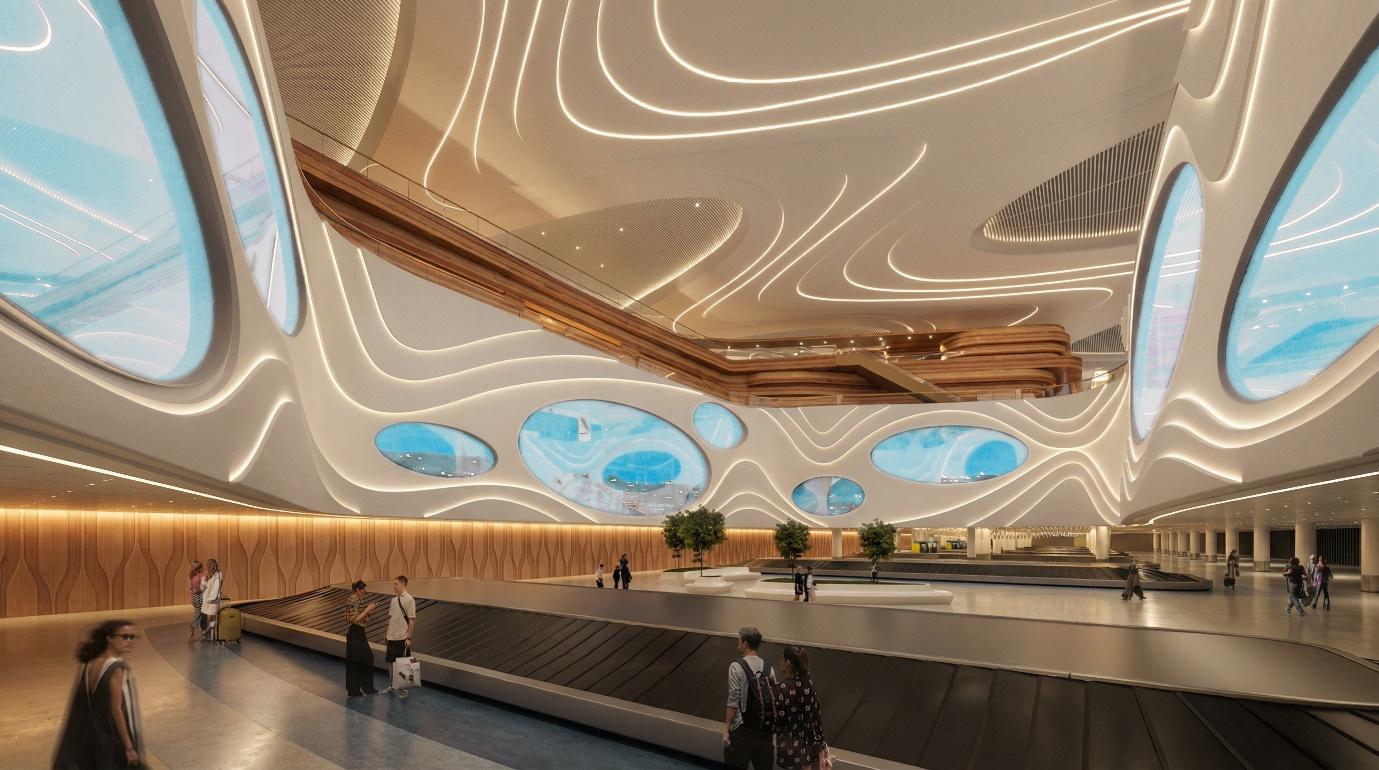
Aedas – The interior design unit for the departure hall is among the Top 10 largest architecture firms in the world, famous for its high-rise complex, commercial, and luxury resort projects. Photo: Aedas Interiors
Moving upstream to the departure hall, the space opens up into 3 airy levels with soaring ceilings, filled with light. HOK arranges the automated check-in counter system off-center to reduce the load on the main traffic flow and make way for terraced green landscapes, interwoven among functional areas.
Passengers are guided through a retail area integrated within lush, open-air spaces. Local materials such as rammed earth walls, oak wood, and terrazzo stone are harmoniously combined, creating a luxurious yet familiar ambiance. Check-in takes only 15-20 seconds, allowing passengers to fully enjoy the dining and shopping experience as if strolling through a high-end commercial center.
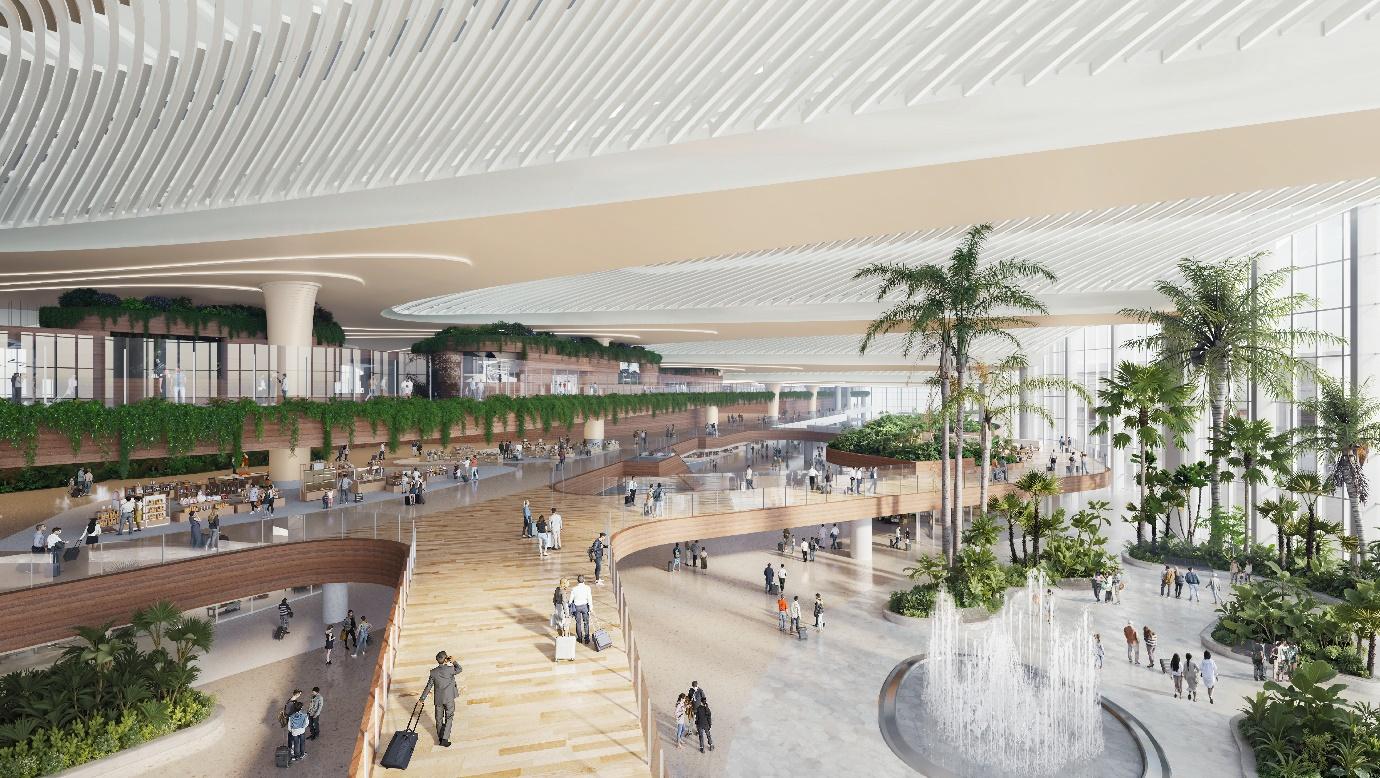
HOK – The terminal design unit, is a renowned global design, architecture, and engineering corporation, known for sustainable projects and environmental design. Photo: HOK
The perfect ending point is the Viewing Gallery area, where passengers can relax and admire the panoramic view of the two bustling runways, with "iron birds" continuously taking off and landing, connecting Phu Quoc to the world. Every detail is meticulously cared for to bring a state of relaxation and excitement, with the most beautiful memories of the island before departure.
As the hardware design is revealed day by day, the software is also being invested in by Sun Group, in collaboration with the "giant" Changi Airports International (CAI), the entity behind the world-class success of Singapore Changi Airport. CAI will be responsible for operating Phu Quoc International Airport, transforming the project from a mere transportation infrastructure into a true destination, where visitors can experience architecture, shopping, sightseeing, and even large-scale festivals.
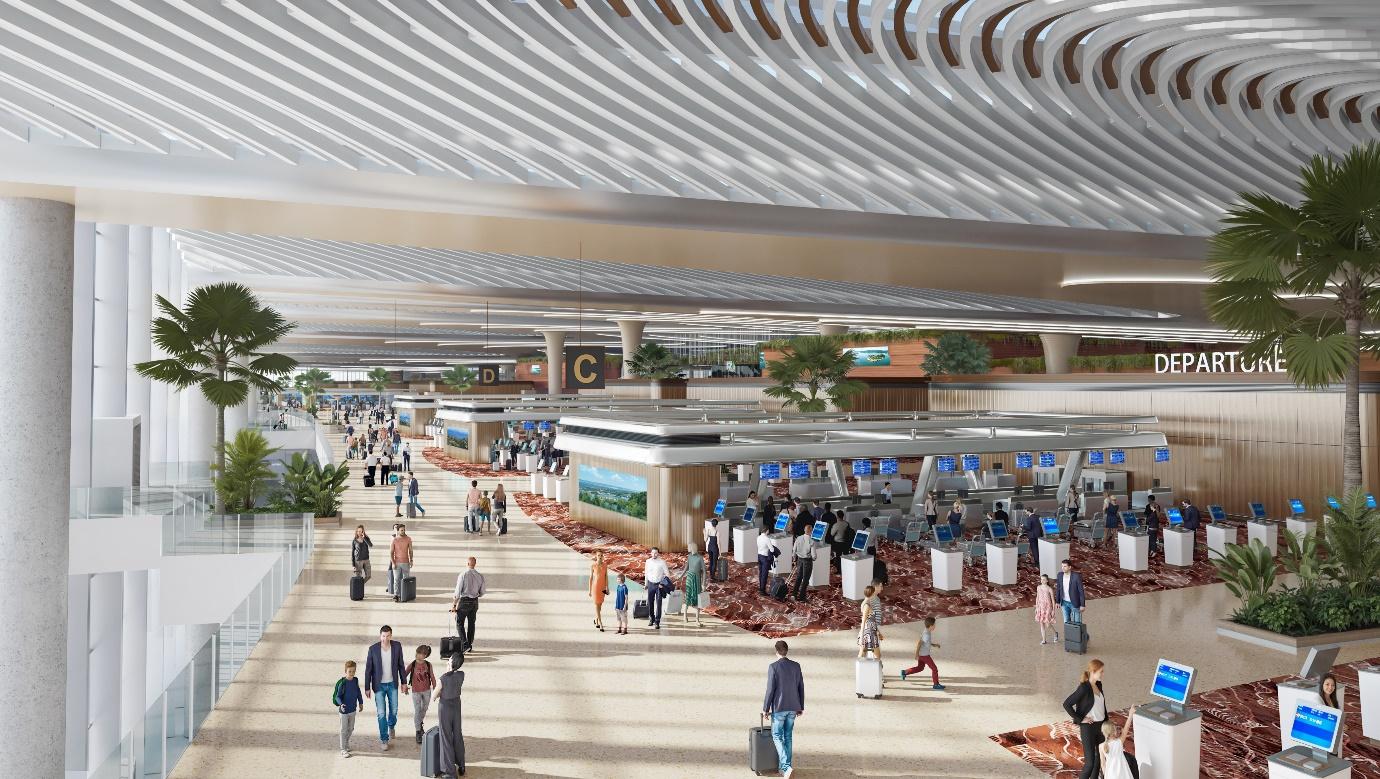
The modern automated check-in area helps reduce the operational pressure of the terminal and optimize the passenger experience. Photo: HOK
Not only a key infrastructure serving APEC 2027, Phu Quoc International Airport embodies the beauty of the Jade Island and the spirit of integration, asserting its national stature in a new era – an era of the nation's self-advancement.