

Phu Quoc International Airport is entering an accelerated expansion phase, aiming to reach a capacity of 24 million passengers annually by APEC 2027 and 50 million in the future, positioning it among the world’s most advanced airports. To achieve this goal, the passenger terminal has been conceived as an architectural landmark, integrating the latest cutting-edge aviation technologies.
The construction brings together international design expertise: CPG Consultants (Singapore) is responsible for the architecture, Artelia Airport (France) oversees airport technology, while Aedas Interiors (Singapore) and HOK (USA) handle the interior design.
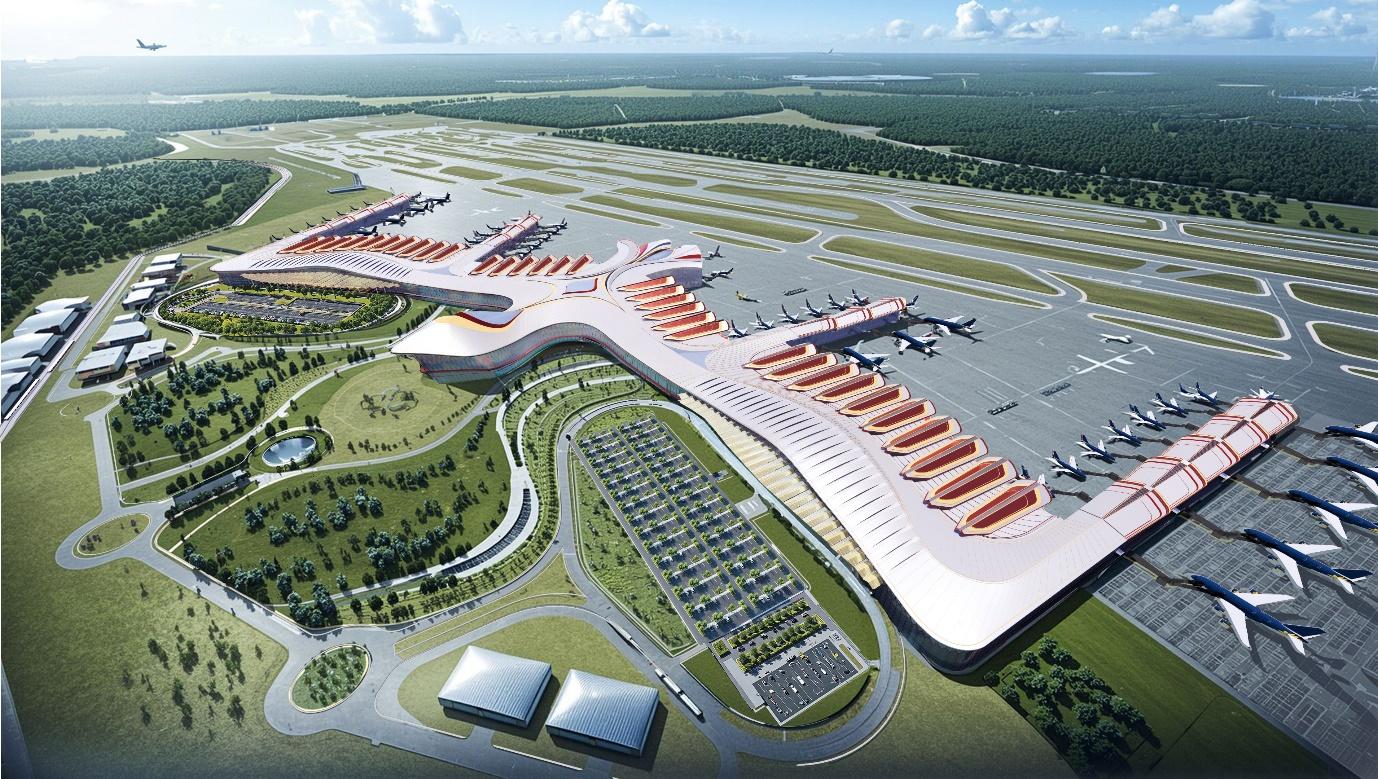
The design of Phu Quoc International Airport is inspired by the image of the Phoenix. Photo: CPG Consultants (Singapore).
Phoenix reborn in contemporary architecture
Inspired by the fiery phoenix, a symbol of renewal and prosperity in East Asian culture, Terminal 2 is sculpted like a bird spreading its wings amidst the emerald sea and lush forests. The design also carries a deeper meaning, symbolizing Vietnam’s ambition to rise and flourish in a new era.
At the arrivals hall, Aedas tells the story of the phoenix descending upon the ocean. Its sweeping curves evoke not only coral reefs and pristine beaches but also the rich heritage of traditional crafts: from fishing boats and green peppers to sim wine and shimmering pearls, that are delicately woven to transform the arrivals terminal into a warm, locally rooted welcome.
Meanwhile, the departure hall, crafted by HOK, embodies the phoenix’s flight, representing Vietnam’s modern aspirations for growth and connectivity. The open-plan design captures the expansive sky, merging with flowing lines reminiscent of Star Beach, that creates a resort-like experience, akin to the lobby of a five-star hotel.
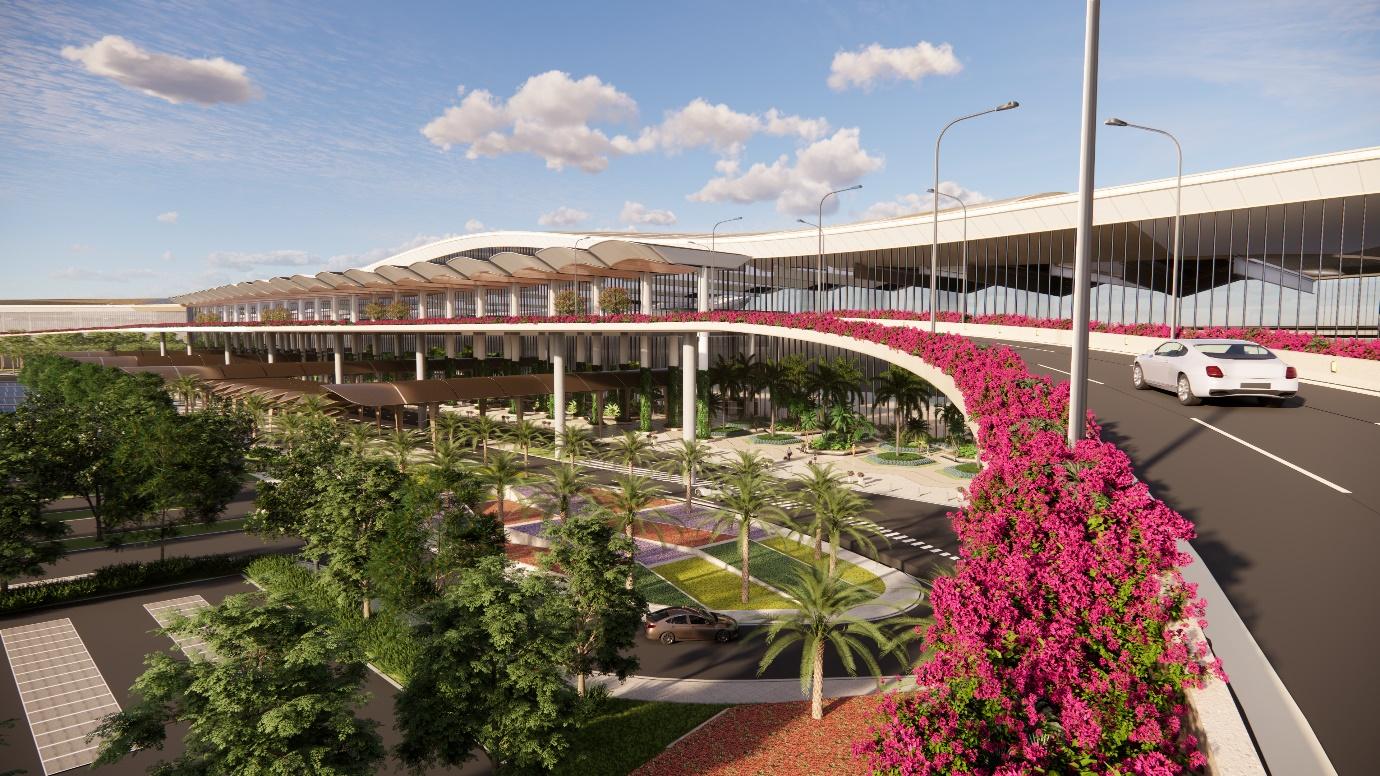
The landscape has been enhanced with lush greenery and tropical flower zones. Photo: CPG Consultants Singapore.
A spatial journey from ocean to sky
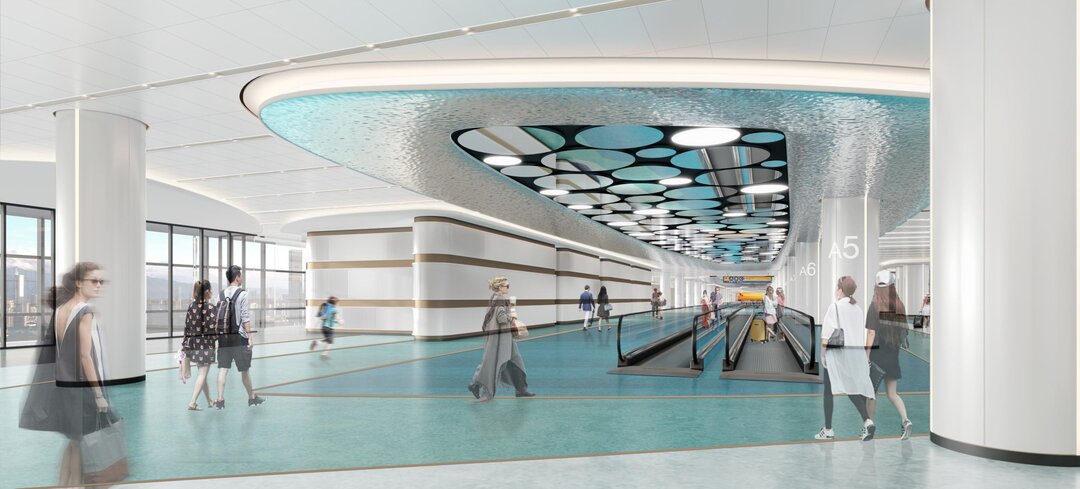
Upon entering the arrivals hall, passengers are immediately immersed in an oceanic world. The floor features asymmetrical patterns that mimic wet sand and ocean currents, intuitively guiding travelers from the immigration corridors to the queuing zones without the need for rigid signage. Feature columns soaring up to 14.5 meters resemble giant coral branches, lifting a rippled metal ceiling whose reflective surface shimmers like water, creating the sensation of moving beneath the sea
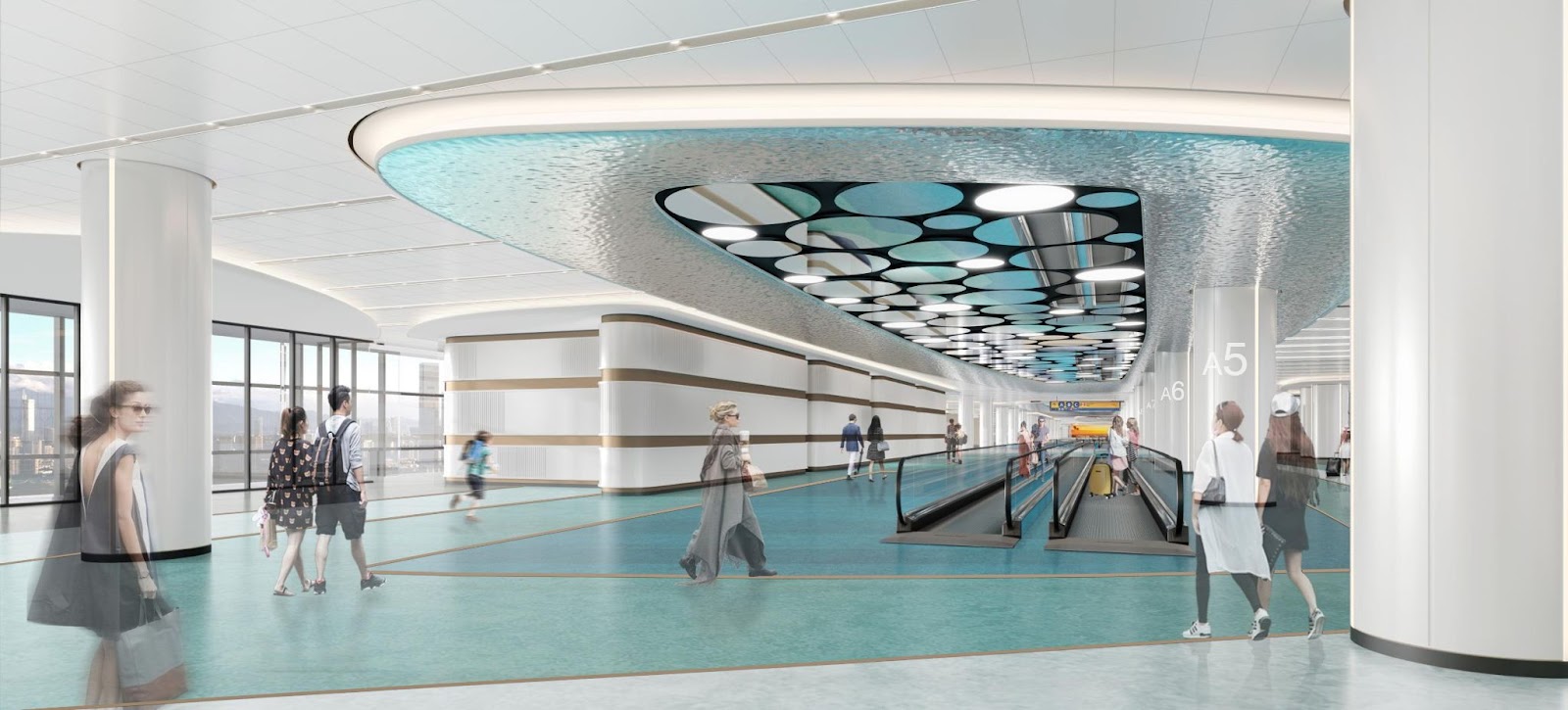
The striking design evokes an undersea landscape in the arrivals hall. Photo: Aedas Interiors.
Deeper into the passport control and remote departure lounge, the color palette gradually shifts from the calming, deep ocean tones to the most energetic colors of coral reefs, creating a sense of relaxation after a long flight. The terminal also features automated service counters, flexibly accommodating both short- and long-term traveler needs.
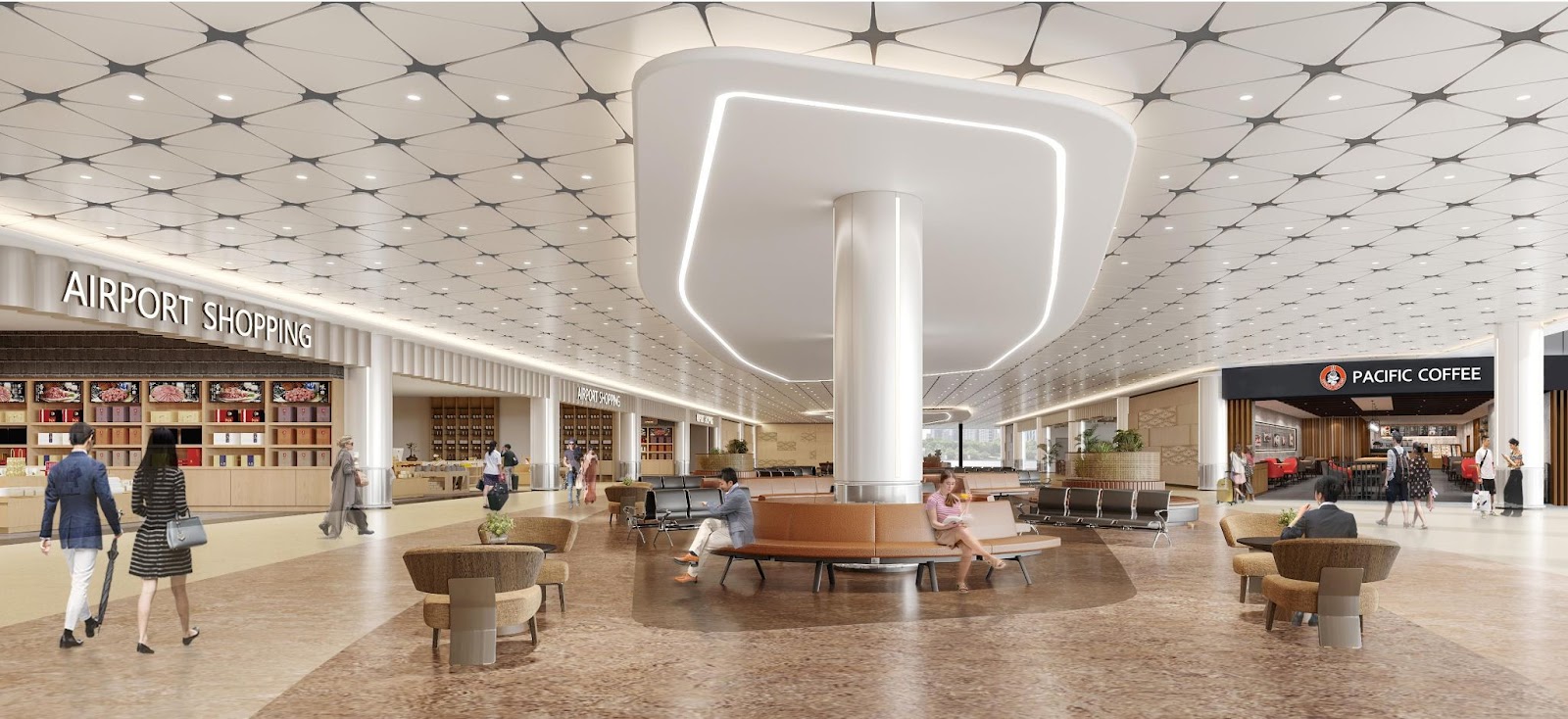
Aedas - the design firm behind the arrivals hall interiors, is ranked among the world’s top 10 architecture firms, renowned for its high-rise, commercial, and luxury resort projects. Photo: Aedas Interiors.
Heading upstream to the departures hall, the space unfolds across three airy levels with soaring ceilings bathed in natural light. HOK positioned the automated check-in counters off the central axis to ease the main circulation flow, making room for terraced green landscapes woven throughout functional zones.
Passengers are guided through retail areas integrated within lush, open atriums. Local materials such as rammed earth walls, oak wood, and terrazzo stone, are harmoniously combined, creating an elegant yet approachable atmosphere. Check-in takes just 15-20 seconds, allowing travelers to fully enjoy dining and shopping experiences,much like strolling through a luxury shopping mall.
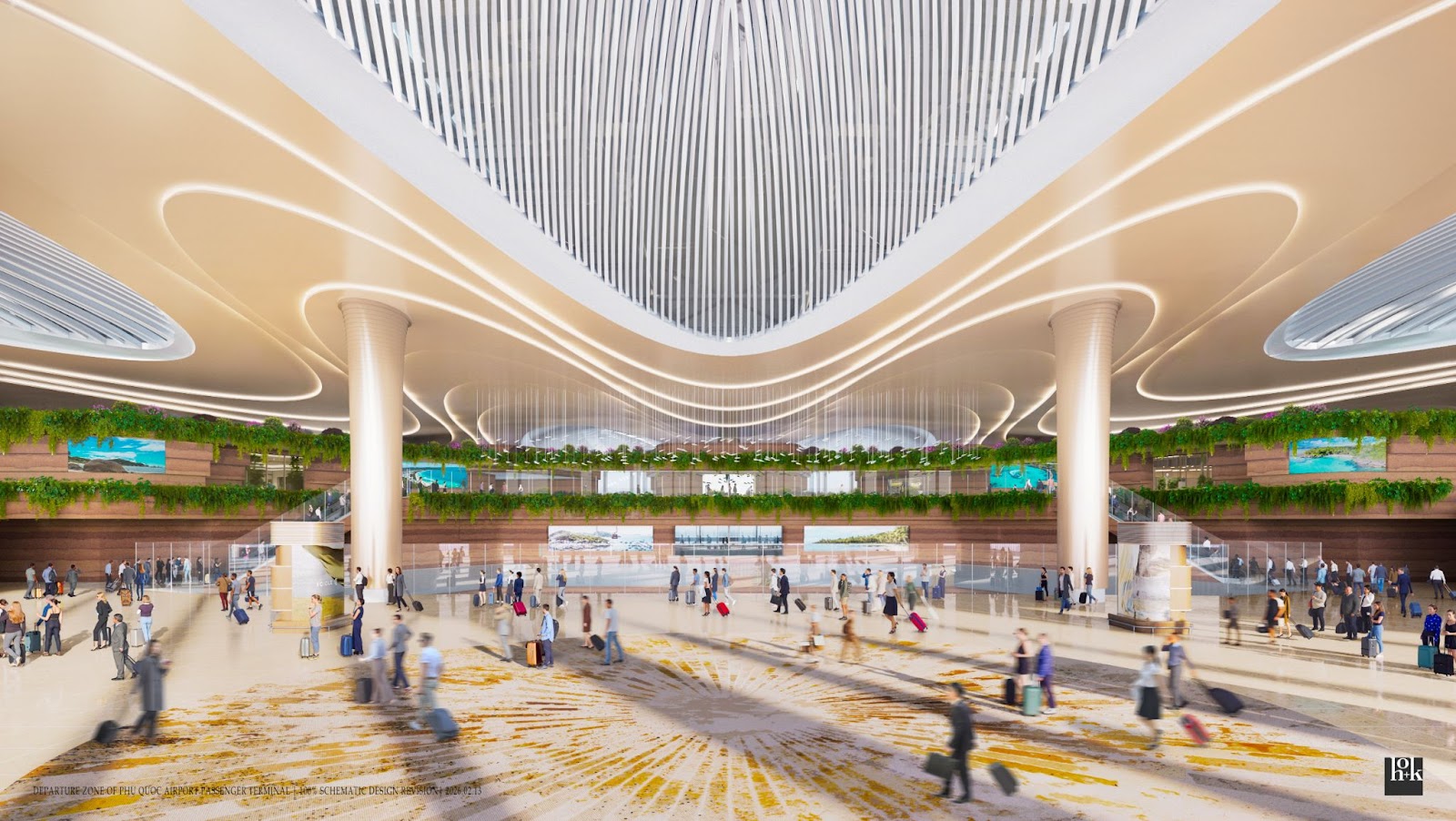
HOK - the firm behind the departure hall design, is a global architecture, engineering, and design corporation renowned for its sustainable and environmentally conscious projects. Photo: HOK.
The perfect finale awaits at the Viewing Gallery, where passengers can unwind while taking in panoramic views of the two bustling runways, with "iron birds" continuously taking off and landing, connecting Phu Quoc to the world. Every detail has been meticulously crafted to evoke both relaxation and excitement, leaving travelers with their fondest memories of the island before departure.
As the hardware of the airport takes shape day by day, the software side is also being systematically developed by Sun Group, in partnership with the global powerhouse Changi Airports International (CAI), the force behind the world-renowned success of Singapore’s Changi Airport. CAI will oversee operations at Phu Quoc International Airport, elevating the facility beyond a conventional transportation hub into a genuine destination, where visitors can enjoy architecture, shopping, sightseeing, and even large-scale festivals.
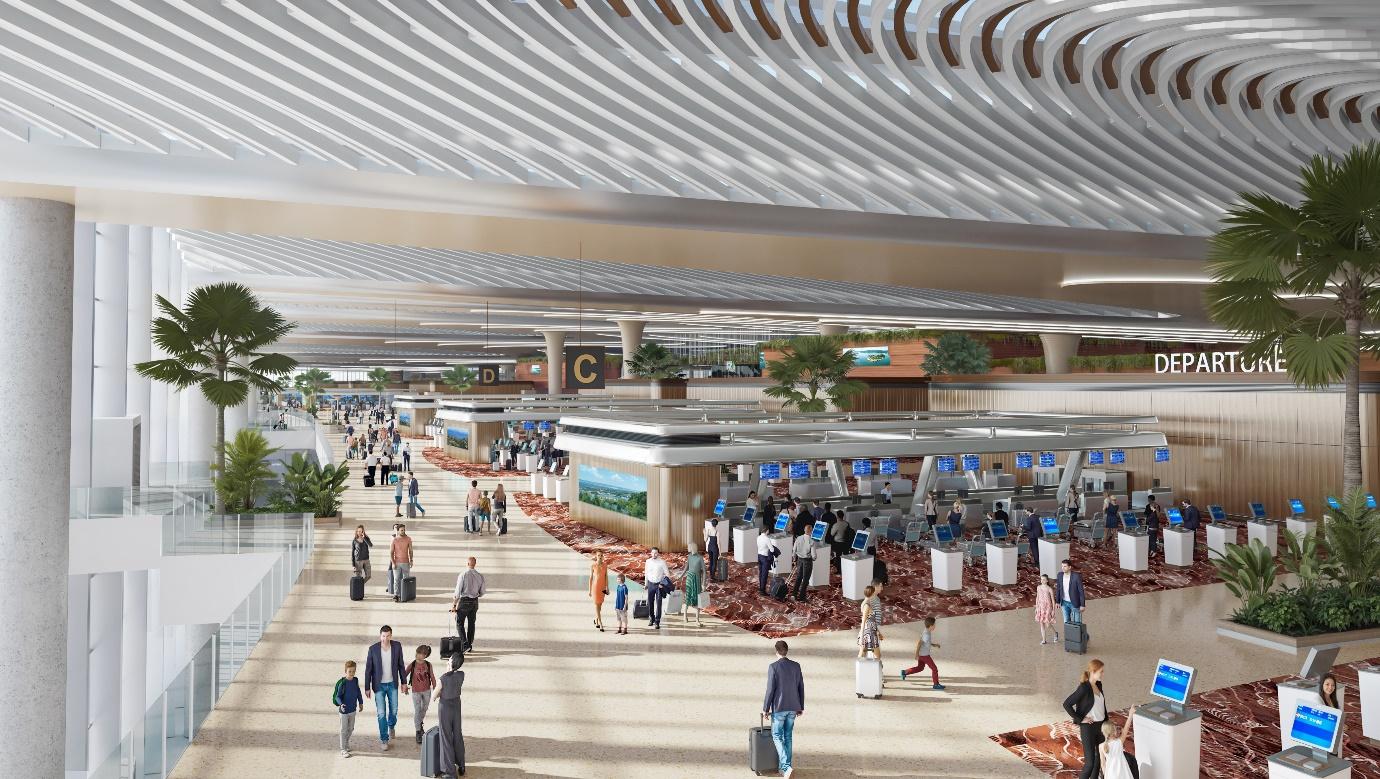
The modern self-service check-in area helps ease terminal operations and enhances the passenger experience. Photo: HOK
More than just a key infrastructure project for APEC 2027, Phu Quoc International Airport embodies the beauty of Pearl Island and the spirit of integration, asserting its national significance in a new era - the era of national rise.