

“World-leading modern Gateway to the sky”
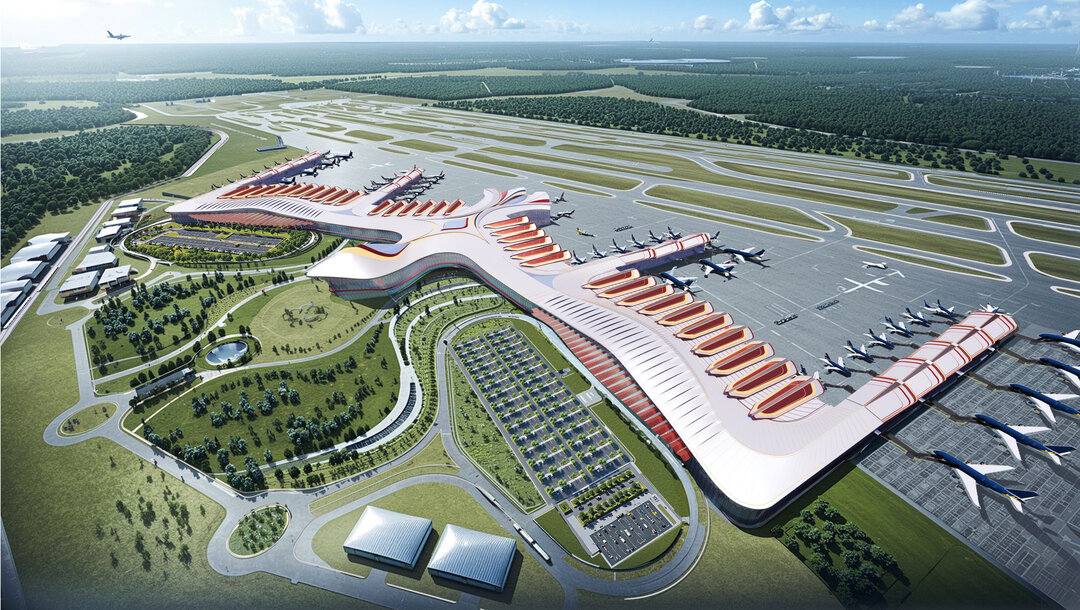
The foundation of this excellence is the expansion project of Phu Quoc International Airport on an area of 1,050 hectares, reaching ICAO Category 4E, increasing capacity to 20 million passengers per year from 2027. Inheriting the success of Changi International Airport (Singapore), which has long been a "monument" in aviation operations, Phu Quoc 2027 will directly apply the TAM management model with "contactless" biometric technology, modern baggage screening technology, reducing check-in time to just 15-20 seconds per person.
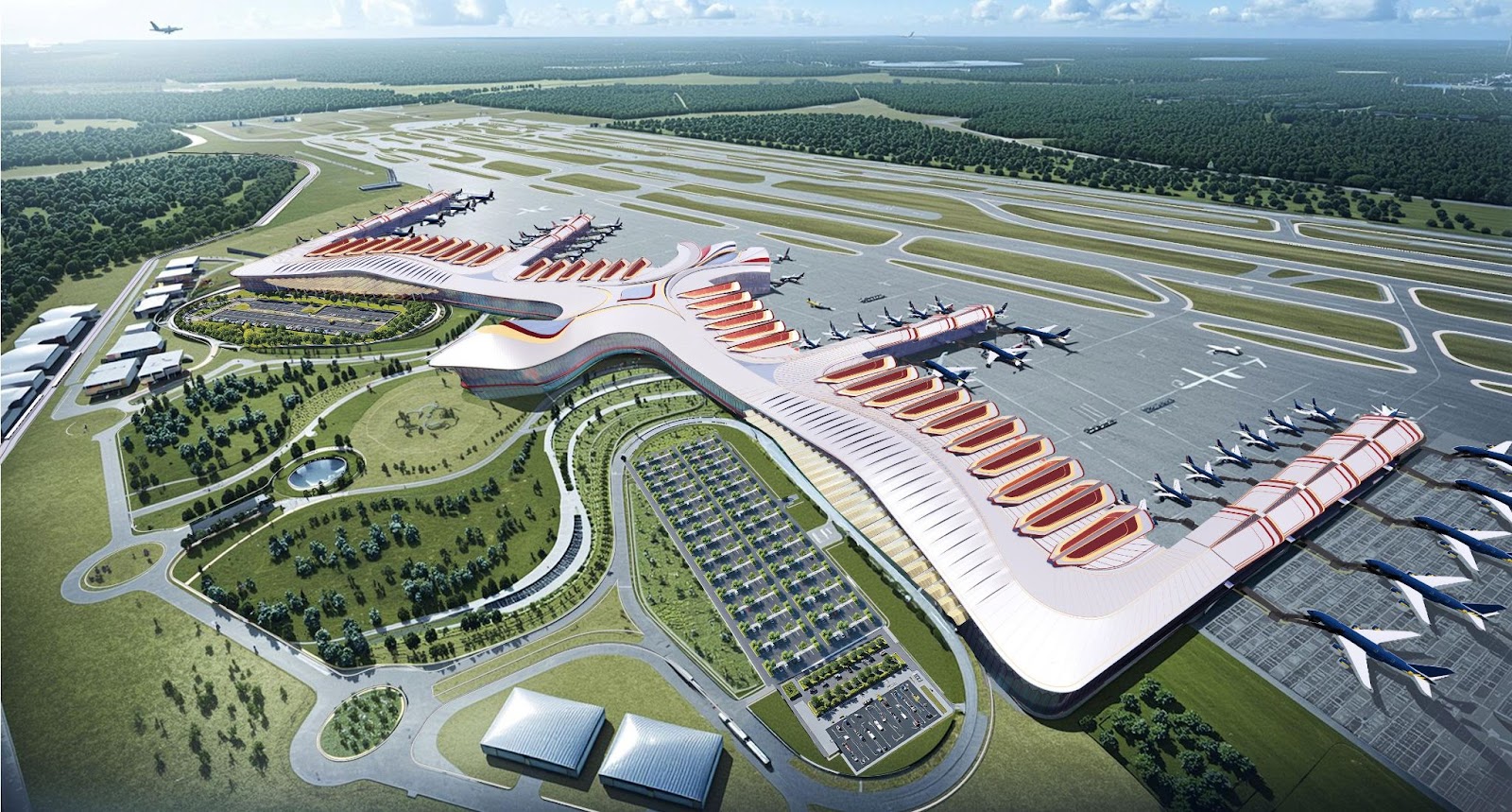
The image of the fire phoenix bird is expected to become a new aviation architectural symbol at Phu Quoc Airport. (Perspective image)
More than just a transit hub, the airport is shaped to be a new architectural symbol of the island. Terminal T2 is inspired by the image of the fire phoenix bird, while the VIP terminal takes the shape of a sea eagle, creating a visual impression similar to how Qatar's Hamad International Airport once impressed with its iconic architecture and premium aviation services. The runway and apron infrastructure are designed to accommodate wide-body aircraft such as Boeing 747 or Airbus A350, approaching the standards of many major international airports.
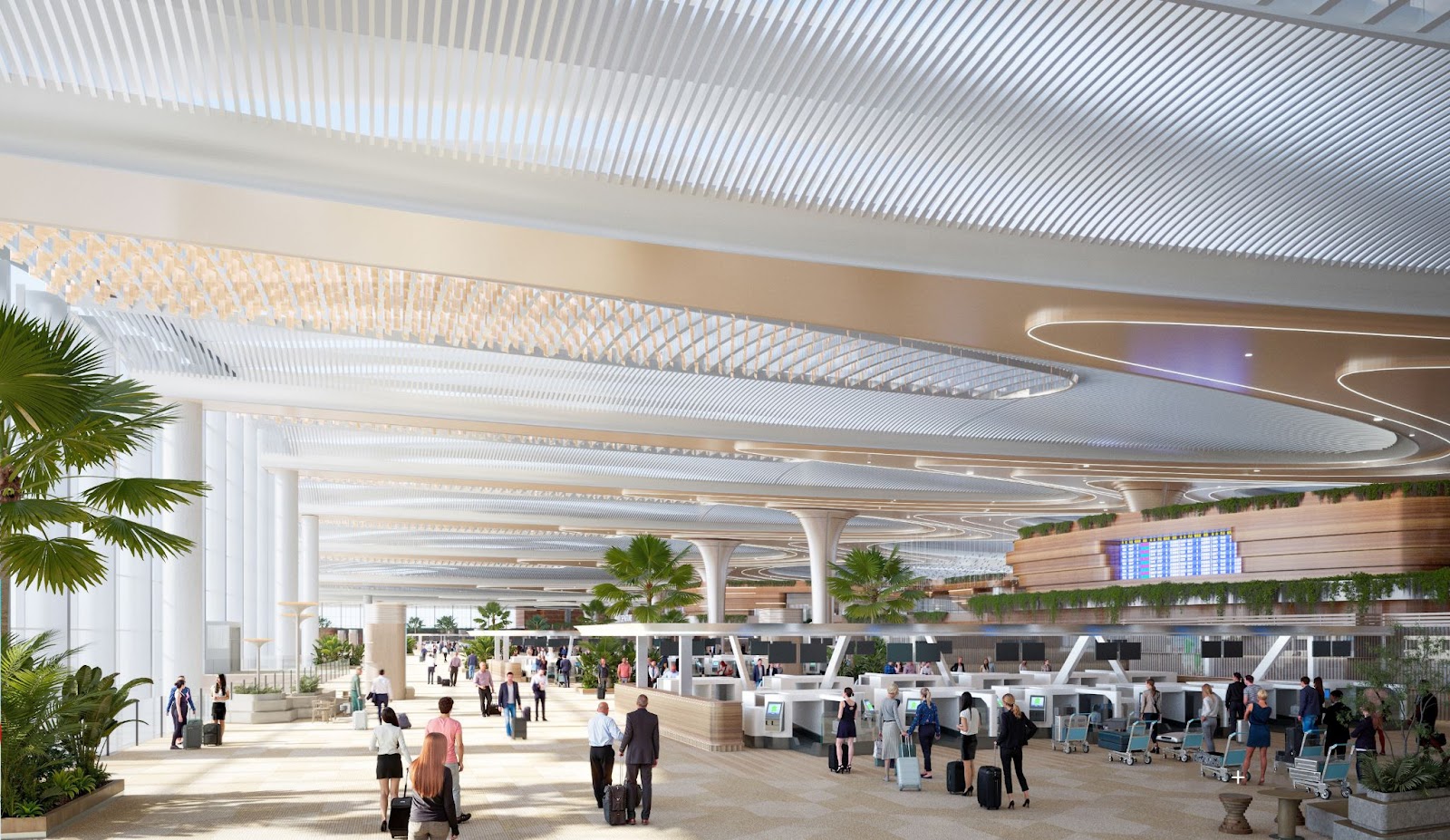
Perspective of a passenger terminal with a modern design and grand future scale.
Mr. Steven Thor – Executive Vice President, Global Atelier Collective of CPG Consultants (Singapore), who directly penned the design for Terminal T2, shared: “CPG shaped the Phu Quoc terminal with a modern design philosophy, focusing on operational efficiency, sustainability, and long-term expandability. Not just an infrastructure project, the work is also expected to become a significant driver, helping Phu Quoc integrate more deeply into the regional and global aviation map, contributing to the realization of the goal to make Phu Quoc a national and international comprehensive economic and tourism-service center, in line with the Government's development orientation.”
Road infrastructure with "firsts in Vietnam"
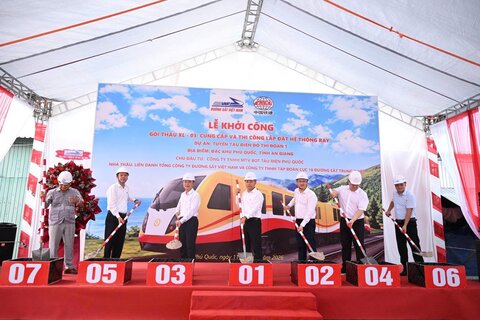
From the sky gateway, road and urban railway (light rail) transport networks are being invested in for Phu Quoc, creating modern infrastructure for the first time on an island in Vietnam. The provincial road DT.975, 17.7km long with 10 lanes and a wide 62m right-of-way, integrates land for parallel train tracks, creating a modern backbone, comparable to tourist boulevards in Australia's Gold Coast. Alongside green spaces and coastal landscapes, the new arterial routes still maintain harmony with the island's characteristic nature.
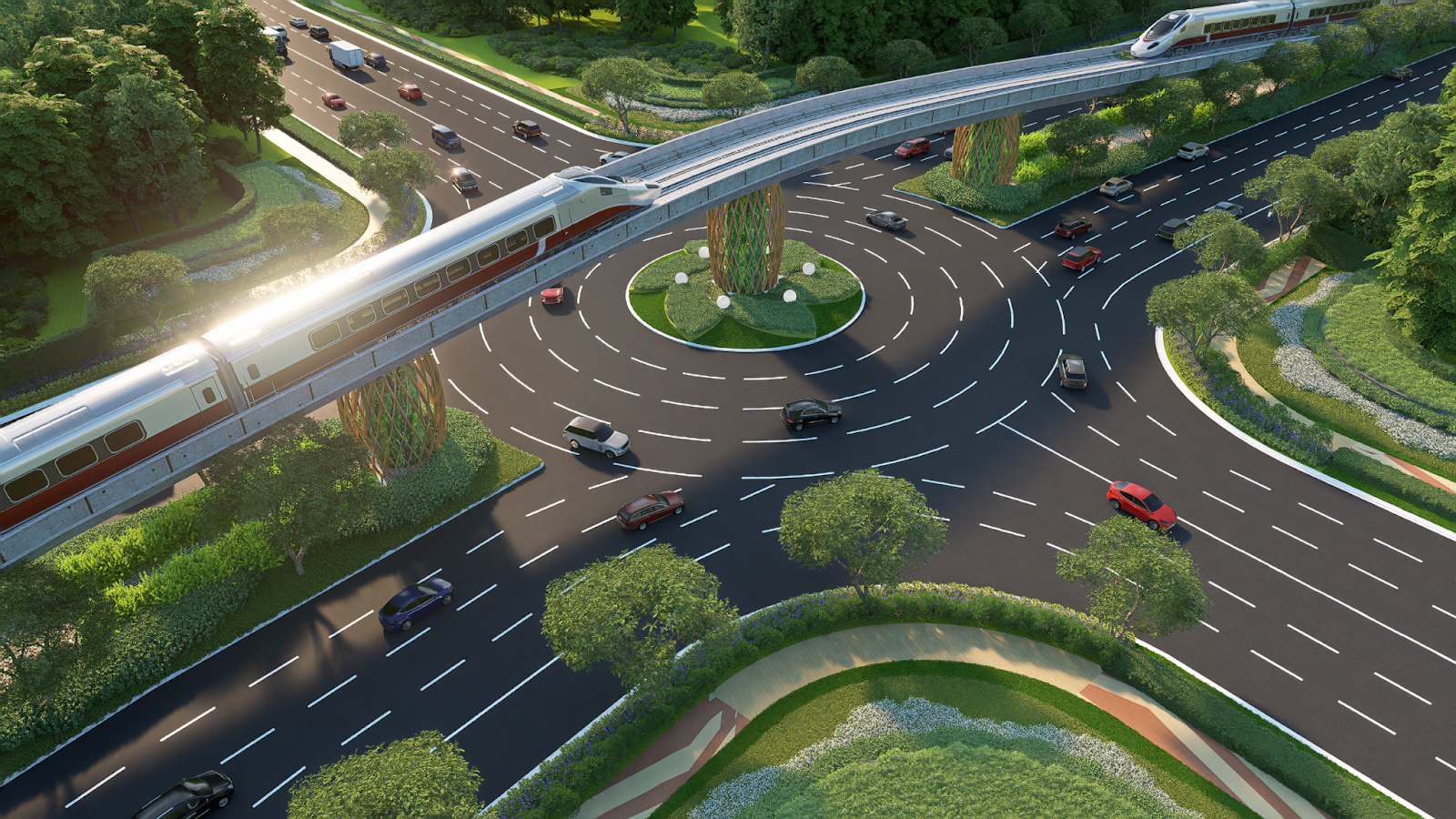
Provincial road DT.975 and the LRT line will create modern transportation infrastructure on Ngoc Island (Perspective photo)
The high-speed LRT line with 6 stations operating continuously from the airport to event clusters is considered a "greening" step for transportation, bringing Phu Quoc on par with advanced island cities in Japan or South Korea. Here, traffic pressure is absolutely relieved by an electrified public transport system, with a capacity of up to 4,500 passengers/hour, something that even resort paradises like Bali (Indonesia) or Phuket (Thailand) are still struggling to find a solution for during peak seasons.
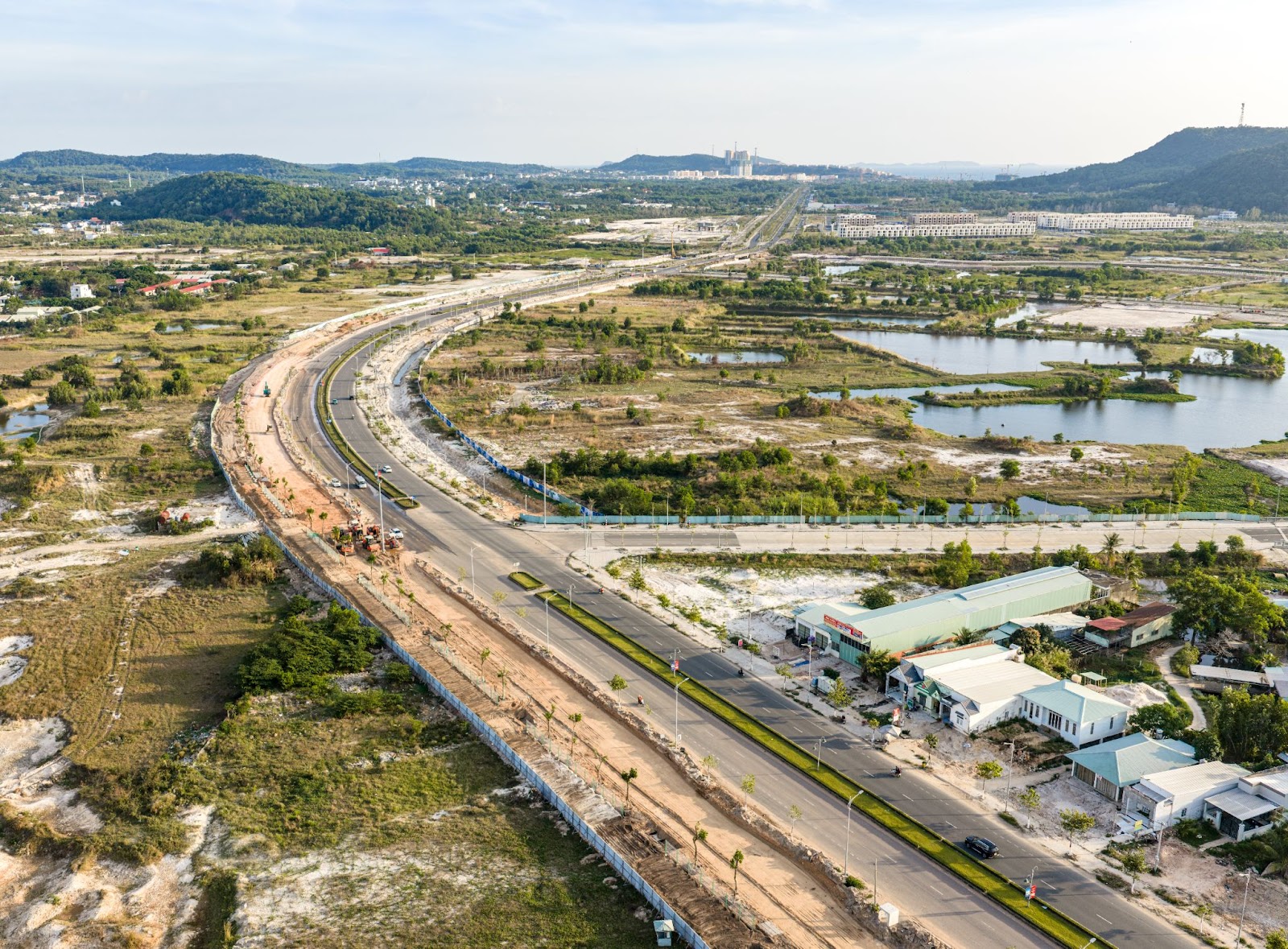
Road DT 975 is being urgently expanded
The key point that creates Phu Quoc's distinctiveness towards APEC 2027 lies in the seamless connectivity within a "speed circle". From the airport, delegates only take less than 20 minutes to travel along the main avenue leading directly to the convention center. At the same time, they can easily access the waterway network via An Thoi Port, which is being upgraded to welcome large cruise ships and yachts, opening up luxurious sightseeing journeys.
Meanwhile, in many cities that have hosted APEC such as San Francisco, Bangkok, or Sydney, the journey from the airport to the central area often takes 30 to 60 minutes depending on the time, not to mention the usual traffic congestion in crowded megacities like New York or Manila. The advantage of multi-modal connectivity from air, road, to sea allows Phu Quoc to optimize traffic flow for large-scale events in a significantly shorter time.
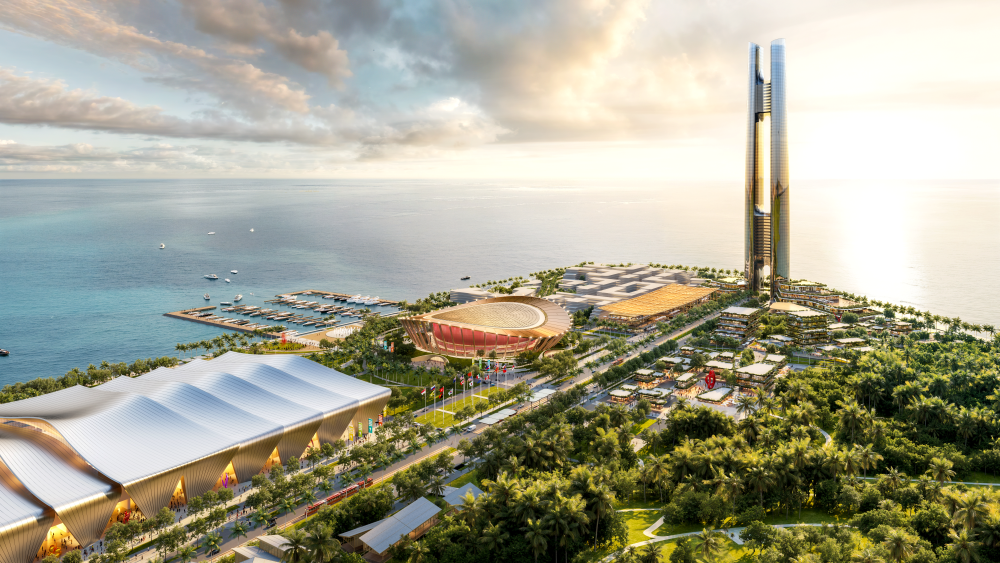
Comprehensive transportation infrastructure c ontributes to creating a smart transportation axis to serve the hosting of APEC 2027 in Phu Quoc .
This rapid preparation not only aims to serve a successful APEC event but also affirms Phu Quoc's new position as one of Asia's most dynamic economic, service, and diplomatic centers. With timeless planning vision, Phu Quoc is redefining the standards of a modern island city in the new era.