

Remove connection bottlenecks, breakthrough tourism development
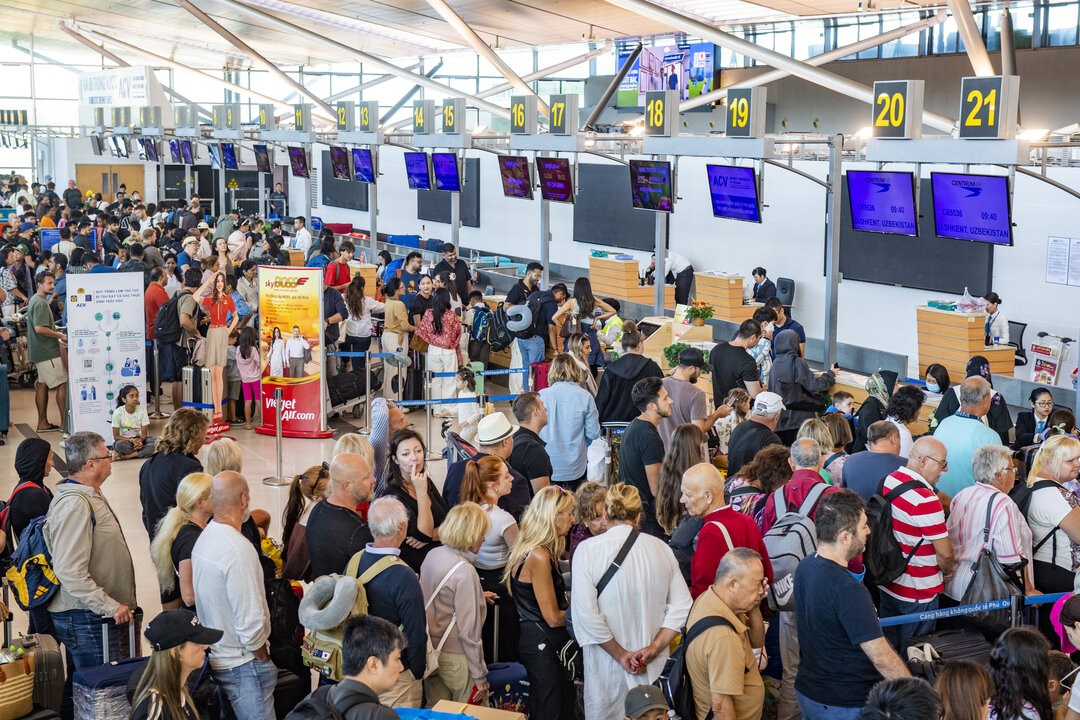
Phu Quoc International Airport currently has a capacity of 4 million passengers per year. However, in reality, from 2024, the airport was 'overloaded' serving over 4.1 million passengers, and in 2025 it will surge with nearly 5.9 million passengers. Besides, the lack of a sufficiently long runway and parking positions to accommodate wide-body aircraft makes Ngoc Island difficult to directly access distant markets such as Bac My, Bac Au, or Tay Au.
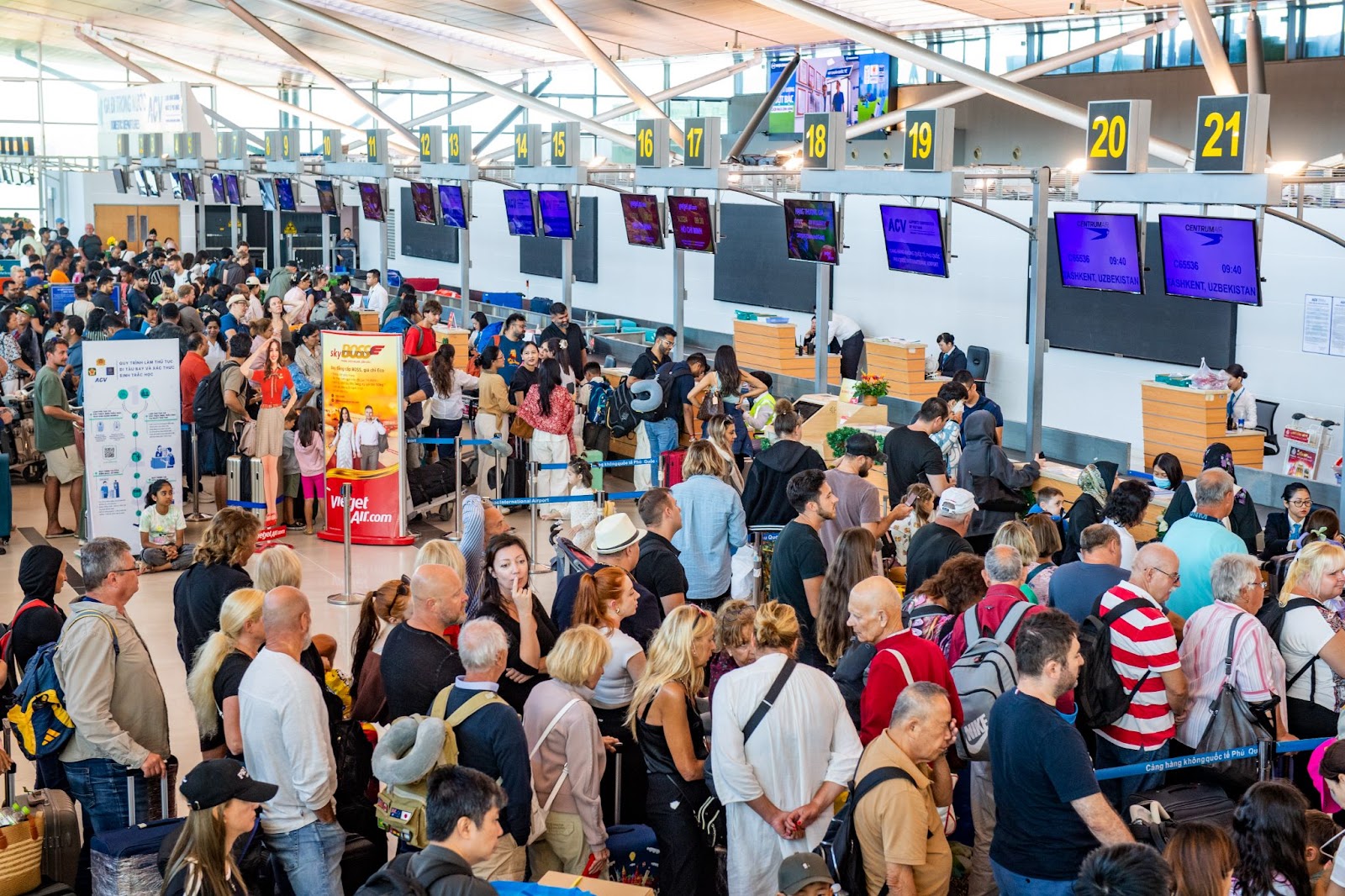
Outstanding annual passenger growth creates an urgent need to upgrade Phu Quoc International Airport.
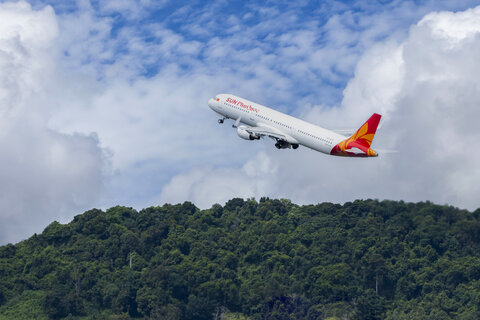
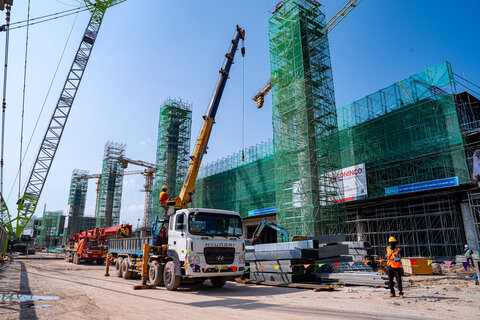
Facing the urgent reality of upgrading aviation infrastructure, Phu Quoc's "gateway" is being invested in by Sun Group with VND 22,000 billion, increasing capacity to 20 million passengers before APEC 2027 and 50 million passengers after 2050. The airport will feature a new T2 terminal, 120 parking bays, and two runways of 3,300-3,500m long meeting ICAO's 4E standard, capable of accommodating wide-body aircraft like Boeing 747, 787, or Airbus A350.
According to Associate Professor, Dr. Pham Trung Luong, former Deputy Director of the Institute for Tourism Research, when the "sky gate" expands, Phu Quoc will truly have the opportunity to screen tourist segments, shifting from quantity to quality, targeting high-spending and long-staying groups. The reality from Bali or Phuket shows that direct flights play a decisive role in reducing seasonality and improving foreign exchange revenue.
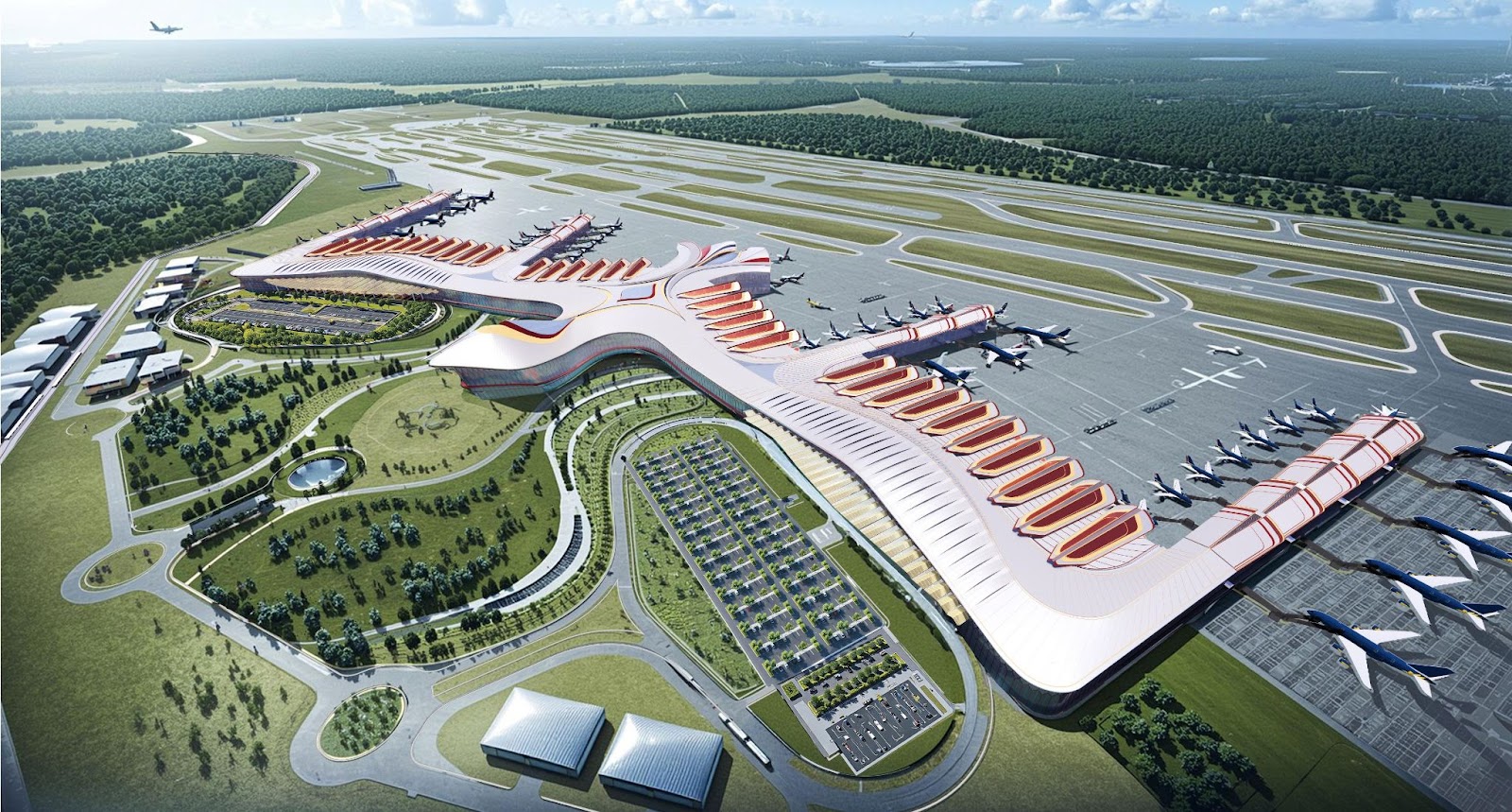
Phu Quoc International Airport is designed and applies the world's leading modern technologies.
Specifically, the construction of the new T2 terminal, VIP terminal with the most modern overall operation process (TAM) today, will create a clear competitive advantage for Phu Quoc MICE tourism. International business groups and dignitaries set strict requirements for accuracy, safety, and privacy in travel. Technologies such as check-in without arriving at the airport, biometrics, automatic baggage sorting... shorten procedures to 15-20 seconds, contributing to shaping a civilized destination, eligible to become a new MICE destination for the world after APEC 2027.
Activating the 'new transit hub' and creating an economic - social value chain
From its role as a tourist gateway, the expanded airport is seen as the nucleus activating the new transit hub - Phu Quoc. After 2050, Phu Quoc International Airport can receive 50,000 tons of goods/year, opening up great potential for freight transport. With its strategic location in Southeast Asia, the Jade Island has the potential to become an air logistics transit station, promoting warehousing, import-export, and duty-free trade.

Phu Quoc International Airport will have special significance in expanding the customer market, increasing flight frequency to the pearl island of Phu Quoc.
From a regional development perspective, Dr. Nguyen Anh Tuan, Director of the Institute for Tourism Development Research, commented: “The upgrade of the airport and related infrastructure will help Phu Quoc transform its role from a single destination to a regional gateway, connecting the Mekong Delta provinces, as well as Cambodia and Thailand”.
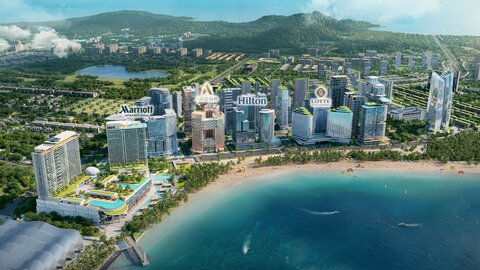
The presence of a world-class international airport also creates a strong ripple effect, increasing the value of the special zone's tourism, service, and real estate ecosystem. Concurrently, the DT.975 route and the LRT connecting the airport to the Convention and Exhibition Center complex, luxury resorts, and entertainment centers will contribute to creating an international standard appearance for Phu Quoc , enhancing the experience of tourists, investors, and high-level delegations. This is also an important factor helping Phu Quoc expand its international customer market, attracting large-scale events, from conferences, exhibitions, festivals to high-class art performance programs.
Socially, the project opens up a “revolution” in employment and human resources on the island. An airport with a capacity of 50 million passengers not only requires construction labor but also demands tens of thousands of highly skilled personnel in aviation technical and operational fields. This is an opportunity to attract experts and young intellectuals to settle down and build a career, raising the intellectual level and quality of life of the locality through a synchronized education, healthcare, and social system developed around the aviation hub.
Thereby, synchronized infrastructure investment not only serves an important diplomatic event but also contributes to building a Phu Quoc that develops harmoniously between economic growth, social stability, and sustainable livelihoods for the people, in line with the long-term development goals of the special zone after APEC. From this impetus, Phu Quoc will truly take off, transforming from a resort paradise into a dynamic and prosperous marine economic center.