

Mobilizing capital from private enterprises
As a large-scale cultural and artistic project and an icon for the capital Hanoi, the Hanoi Opera House, part of the Thematic cultural and artistic park in the area near West Lake, is considered an important project that will contribute to changing the capital's appearance in the new era.
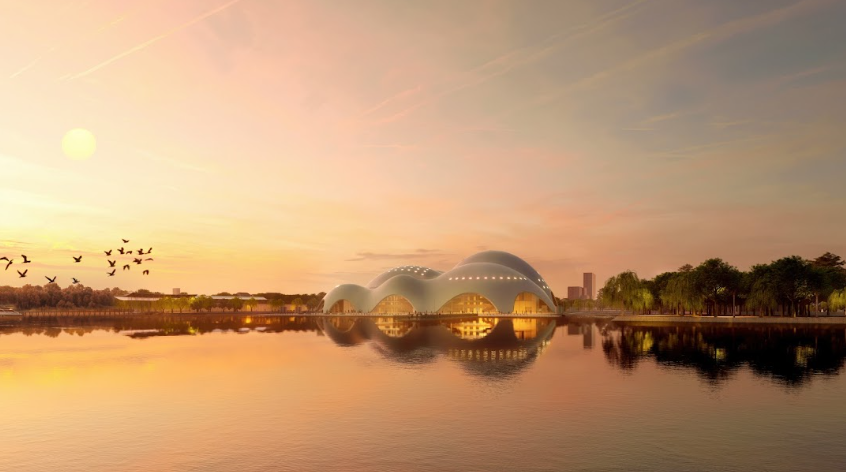
Hanoi Opera House is a rare cultural and artistic work built with 100% socialized capital
Notably, this is a rare large-scale cultural and artistic project built with 100% socialized capital from Sun Group. Mobilizing capital from private enterprises has not only affirmed the city's correct direction in saving state budget, but also mobilized the potential and intellect of large private economic groups in investing, developing, and beautifying the country. Furthermore, the fact that a private group invests non-profit in a cultural project perceived as having low capital recovery potential also demonstrates the responsibility of businesses towards the common development of the country.
It is known that with a total investment of over 12,000 billion VND, the project will be implemented by Sun Group, under the strict control of Hanoi City throughout the design, construction, and operation process.
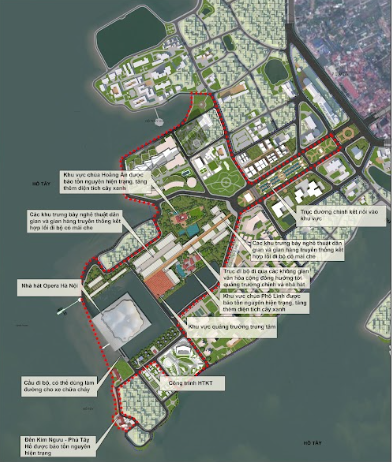
Project Approval
According to the project approval, the total planned area of over 44 hectares in Tay Ho ward will be planned as a specialized cultural and artistic park complex, a city theater, religious and spiritual structures, an entertainment area, and commercial hotel services. Located in the center of this complex, the Hanoi Opera House on Dam Tri Lake, adjacent to West Lake, is considered a major cultural project, aimed at attracting tourists from all over the world to Hanoi and becoming a symbol that elevates the beauty of Hanoi.
Designed to become a new symbol of Vietnam
The theater project is designed by the famous Italian architect Renzo Piano – a giant of modern architecture with world-changing works. This is considered a stroke of luck for Vietnam as the legend Renzo Piano, with 88 years of life and 67 years of career, chose to dedicate his life's accumulated essence to designing the Hanoi Opera House.
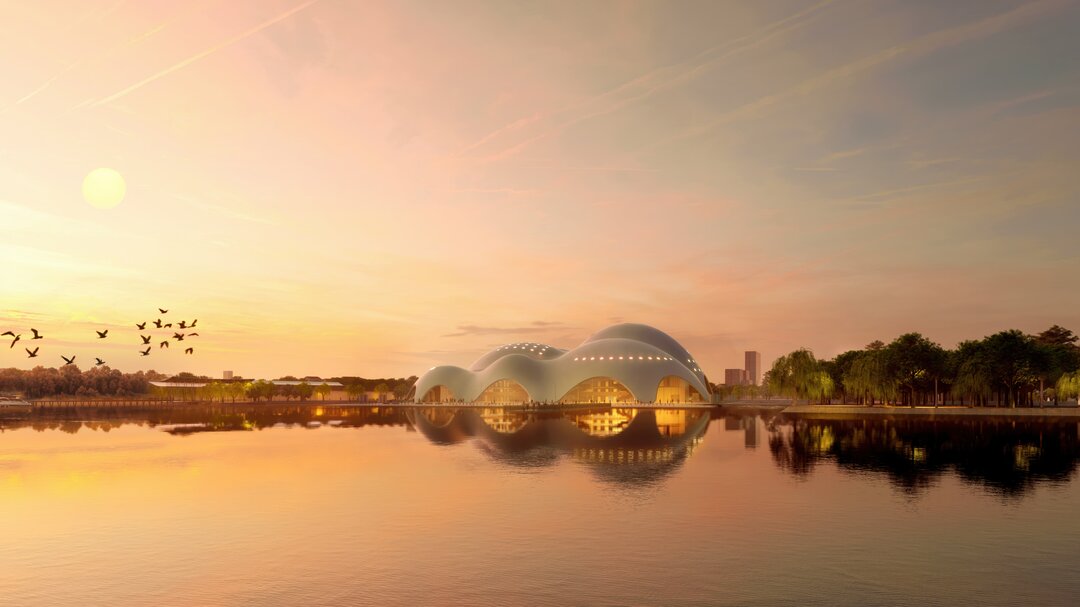
The structure features modern architecture with a dome inspired by the ripples of West Lake. The dome utilizes a self-supporting thin shell structure. The surface is coated with a material that creates a mother-of-pearl effect, changing colors to reflect the poetic scenery of West Lake.
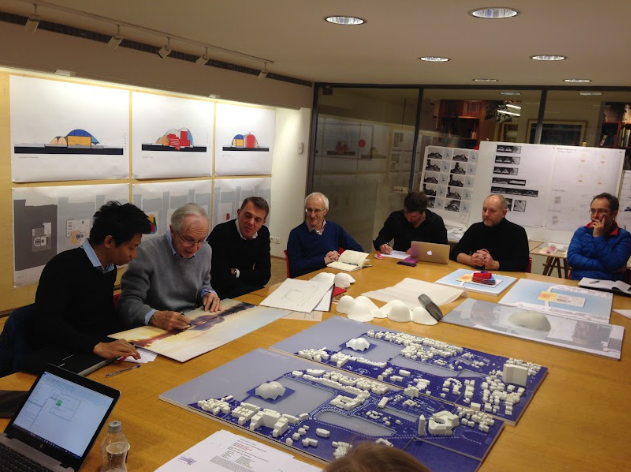
Architect Renzo Piano nurtured the idea of a thin shell structure for the project 40 years ago
Viewed from the outside, the dome's curves appear natural, but in reality, it is the result of Renzo Piano's in-depth research process from biological structural simulations of bones, shells, bird skulls..., or studies on the venation of water lily leaves floating on the water's surface. This thin shell structure was an idea nurtured by architect Renzo Piano 40 years ago - a time when construction techniques were not yet developed enough to meet this sophisticated design. Today, with the advancement of computer technology, Architect Renzo can confidently realize his dream at the Hanoi Opera House project.
Architect Renzo Piano stated that with the Hanoi Opera House , he wishes to contribute to building an iconic theater for Vietnam, and place it among the most famous theaters in the world such as those in Paris, Milan, Berlin, London, New York, Los Angeles…
Sun Group's decision to approach the legendary Renzo Piano - a master architect renowned for his iconic global projects, choosing to 'stand on the shoulders of a giant' to design the theater has brought a great opportunity for Vietnam to have an art architectural work of commensurate value, a structure destined to become a new symbol of Vietnam.
Beautifying the capital in the new era
Recently, the Hanoi City People's Committee announced the commencement of 8 key projects on the occasion of the 71st anniversary of the Capital's Liberation (October 10th), including projects of particular community interest such as the project to renovate and build a park along both sides of the To Lich River, the construction of a Theater in Tay Ho, the construction of the Tran Hung Dao Bridge.... These key projects are considered important milestones for Hanoi to transform its appearance, entering a new era that is greener, cleaner, and more beautiful, worthy of a thousand-year-old cultural capital.
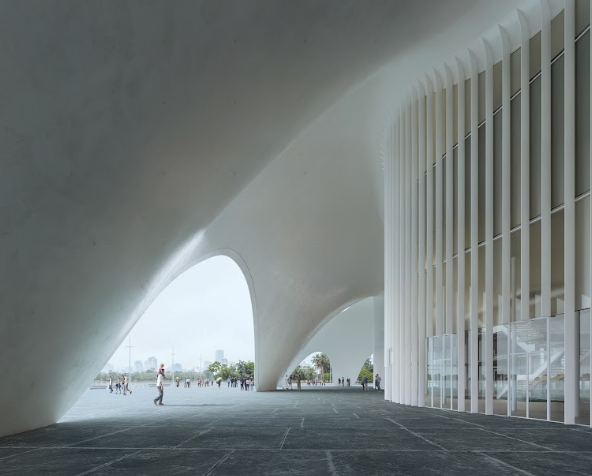
Hanoi Opera House will be an entertainment and leisure destination for the capital's residents.
Specifically for the Hanoi Opera House project, this is not merely a venue for world-class artistic programs, but also an entertainment and leisure destination for the capital's residents.
Besides the 1,815-seat opera hall (3 times the size of Hanoi Grand Opera House, approximately Esplanade Singapore), and the 1,010 - 2,000-seat multi-purpose hall, the Opera House also has many other multi-purpose spaces such as the Main Hall, Rehearsal and practice rooms, Museum, Observation deck.... This will not only be a place that can serve various types of artistic performances such as opera, concerts, ballet, music festivals…, but also an iconic cultural space of the capital.
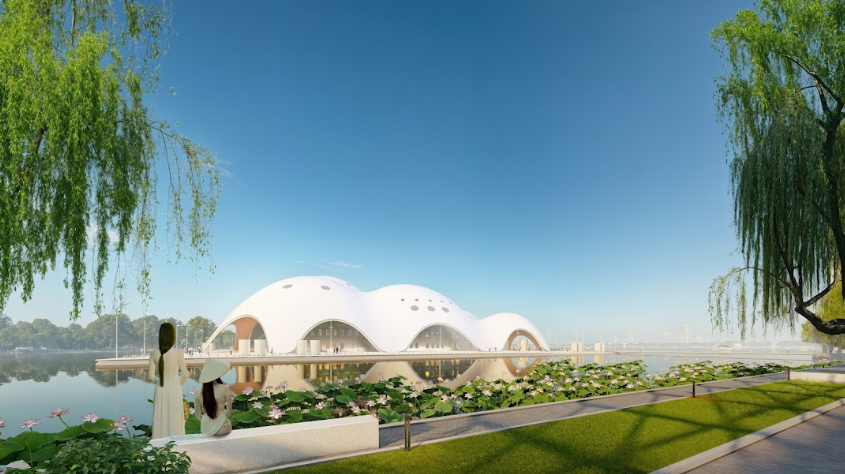
Landscape planning design around the model of a green park
Architect Renzo is the one who presides over the idea of landscape planning design around the model of a green park. Many trees will be planted around the theater area to create a public park where the capital's residents come not only to enjoy art but also to relax and sightsee. The ponds and lakes around the area such as Pho Linh Pagoda's lotus pond, Thuy Su lake… will be invested in cleaning, renovating, restoring, and planting Tay Ho lotus to synchronize with the entire park area.
For Architect Renzo Piano in particular and for Hanoi in general, the Hanoi Opera House is not merely an architectural work. It is a work of art that carries the soul of Hanoi, reviving the cultural nuances of the past, nurturing the simple ways of life of the present, while painting the colors of Hanoi's future in a new era of self-assertion.