

A timeless architectural masterpiece
Landmark projects that transformed the urban landscape in Paris, London... by the master architect Renzo Piano are always imbued with a philosophy for humanity, strong inspirations from nature, culture, history, and people, and the Hanoi Opera House continues this stream.
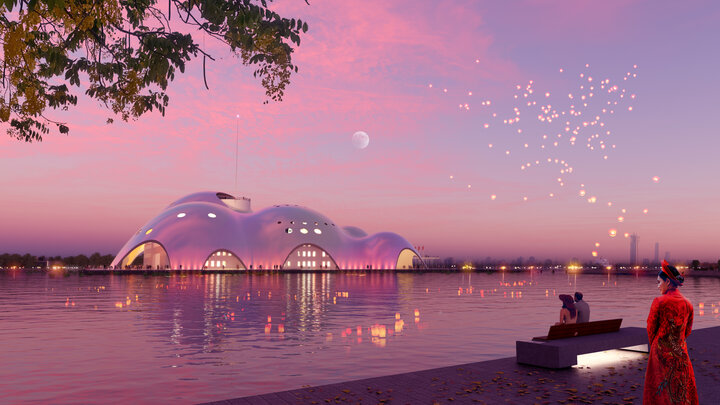
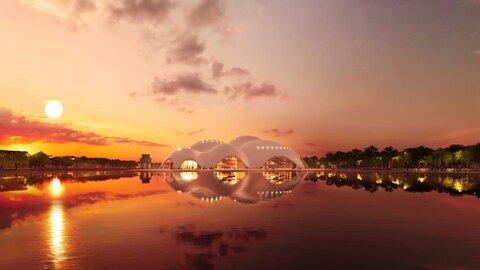
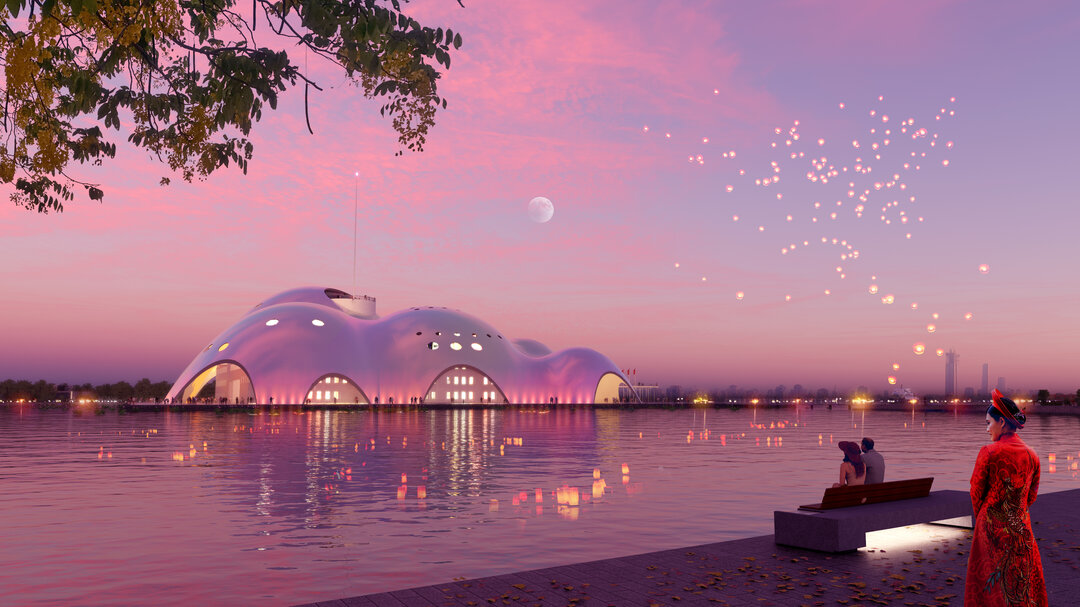
Having nurtured 40 years of research into thin shell structure technology – an extremely complex and elaborate technology – the 87-year-old architect with 65 years of experience wishes to apply this cutting-edge technology to the dome of the Hanoi Opera House for the first time. The roof shell structure, with a thickness ranging from 200 mm to 600 mm, is the theater's most unique technology. This design not only creates an elegant and unique beauty for the structure but also ensures the best sound filtering for audio experiences during musical performances – one of the highest requirements for world-class theaters. The naturally curved dome, a prominent identifying symbol, is the result of Renzo Piano's extremely in-depth research process, from biological structural simulations of bones, shells, bird skulls..., or studies on the veins of water lilies floating on the water surface.

Hanoi Opera House possesses the top-tier technology of a “thin shell structure”
Not only does it have the world's most unique roof shell, but the Hanoi Opera House also applies many advanced technologies and design techniques. The entire walls of the main auditorium are equipped with a system of mechanically operated acoustic panels. The acoustic panels will be controlled to open, close, move up and down in different directions and positions, customized for each type of performance, ensuring appropriate sound reflection, sound absorption, and reverberation time. This is the first system in Vietnam, and few theaters in the world have it.
The main functional spaces of the theater are also perfectly interconnected. If a circle is drawn around each functional space, and then a hemisphere is erected on each line within, the hemispheres will intersect to form the shape of the roof shell. Every design detail of the theater has been meticulously calculated to bring the highest efficiency in terms of structure, landscape, and artistic experience.
“Island of Music” converges top-tier art
With the “final masterpiece” being the Hanoi Opera House, architect Renzo Piano wishes to contribute to building an iconic theater for Vietnam, placing it on the list of world-famous theaters. According to experts, renowned opera houses such as Sydney Opera House (Australia), La Scala (Italy), Royal Opera House (UK)... are not just venues for artistic performances but also national symbols, attracting millions of tourists each year to experience cultural values.
In recent years, the art appreciation habits of Hanoians have reached a new level. Vietnam's century-old theaters are still at a level serving domestic-scale art programs, and cannot yet be a must-visit destination for global cultural and artistic names. Meanwhile, the Hanoi Opera House with an opera auditorium of over 1,800 seats, comparable to Singapore's Esplanade Theater along with its state-of-the-art sound system will elevate the space, ready for international performances. Attracting international artists and global connoisseurs.

Hanoi Opera House embodies the cultural and artistic values of the capital
With its unique features and inherent values, the Hanoi Opera House is not just an architectural work but also a cultural symbol, elevating Hanoi's image from a historical city to a center of culture and art that breathes with the times, embodying the essence of global culture. This is a testament to the strong evolution of a modern Hanoi that still preserves its identity.