

From the cabins of the world’s longest three-wire cable car gliding toward Hon Thom Island, visitors have long caught glimpses of a striking tower rising above a collection of buildings slowly taking shape. Yet behind those still-closed doors, an entirely new resort experience has quietly been coming to life.
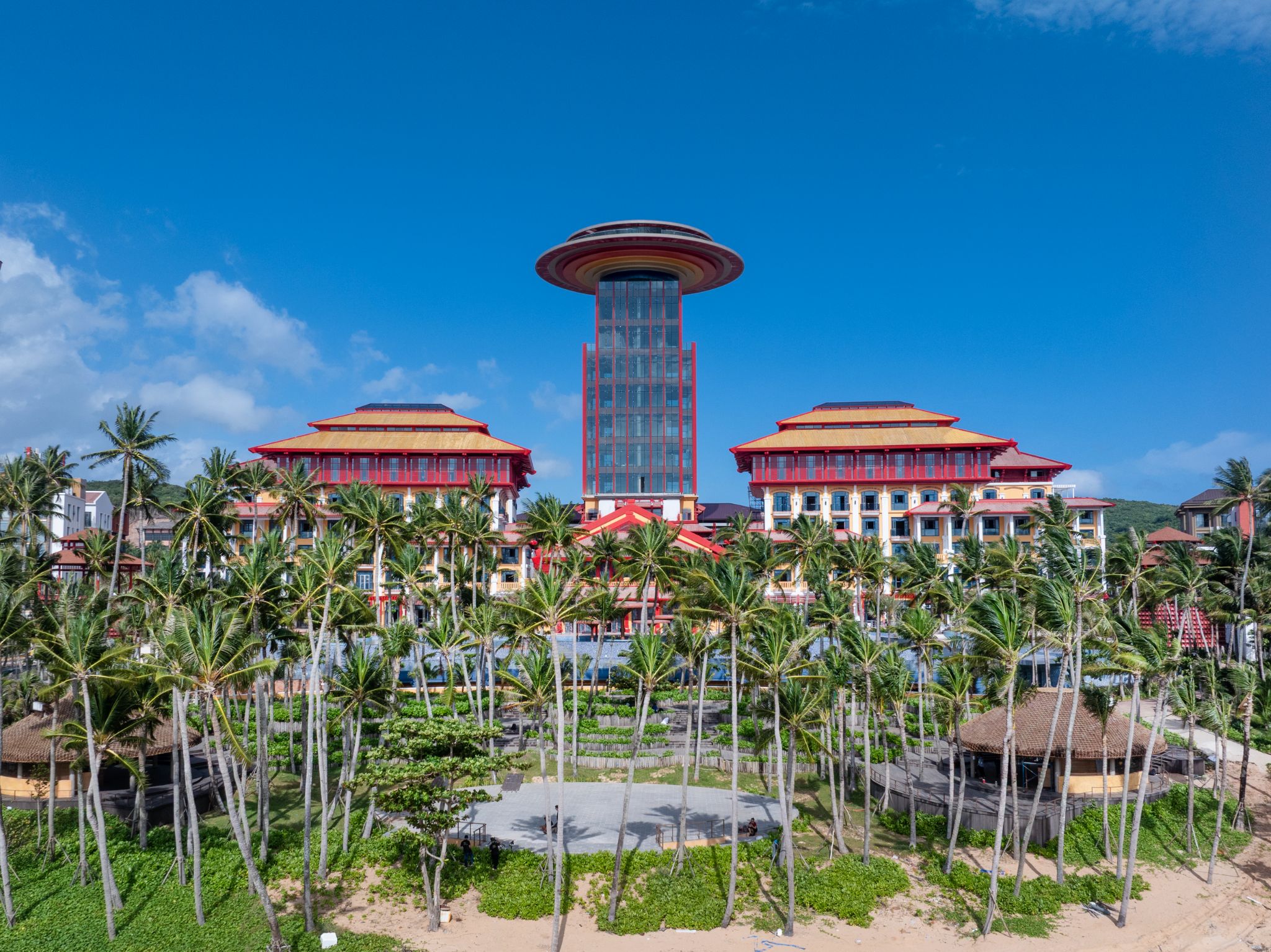
After months of anticipation, the first images from inside Rixos Phu Quoc have finally been revealed, offering a closer look at a resort that not only embraces its spectacular seaside setting but also weaves layers of Vietnamese cultural heritage into every corner of the property.
Inspired by the grandeur of Hue's imperial heritage
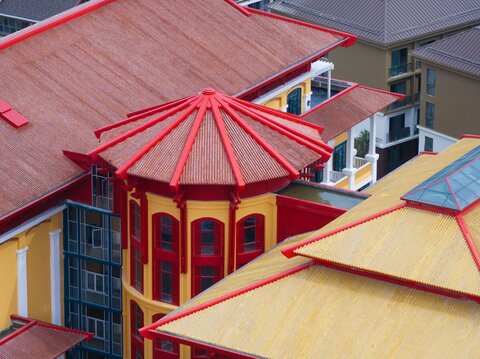
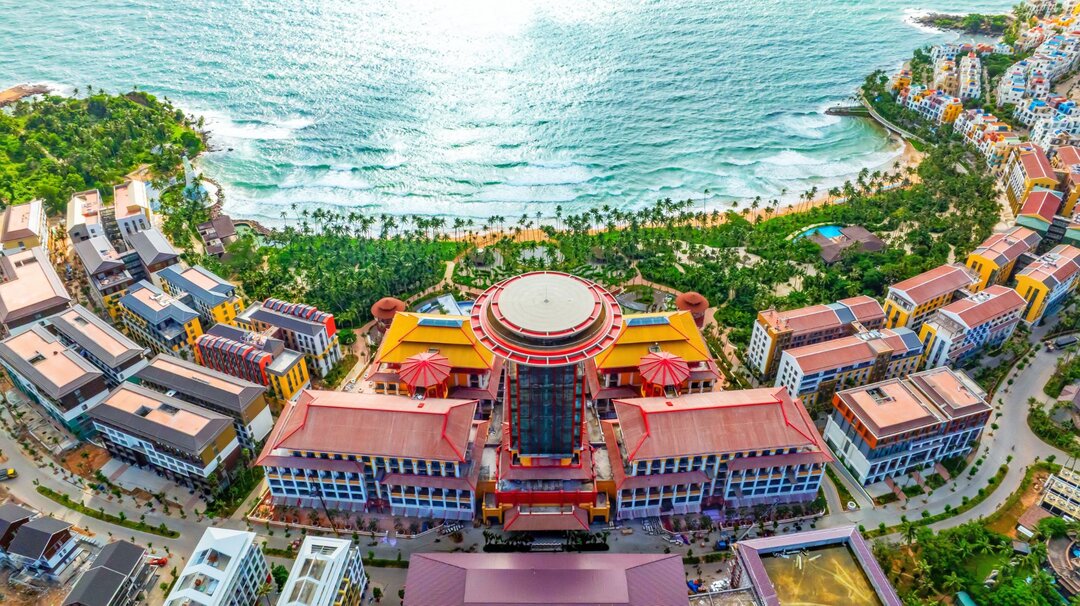
Among the first spaces to capture attention is the grand arrival lobby, where the glass-clad Nam Phuong Tower rises alongside an impressive architectural ensemble inspired by Hue's imperial palaces. Deep crimson and warm gold dominate the interiors, instantly evoking the splendour of Vietnam's former royal court. Layered tiled roofs, traditional timber structures and exposed red-painted beams add depth and grandeur to the overall design.
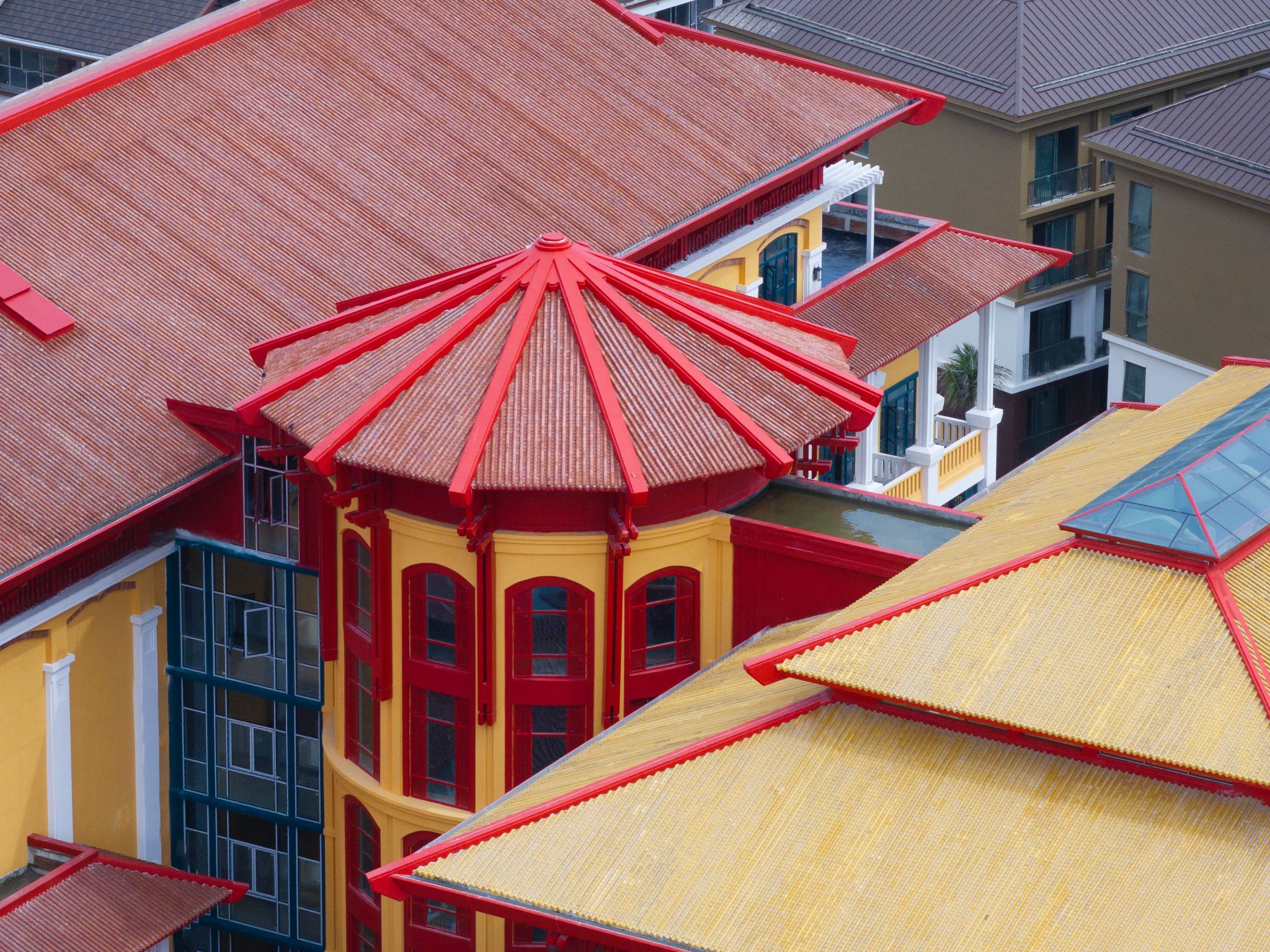
Elsewhere, elegant white colonnades influenced by Indochine architecture stand alongside the signature crimson-and-gold palette, creating a refined dialogue between traditional Vietnamese architecture and French colonial aesthetics. The result feels both stately and graceful – a fitting interpretation of imperial elegance within a contemporary beachfront resort.
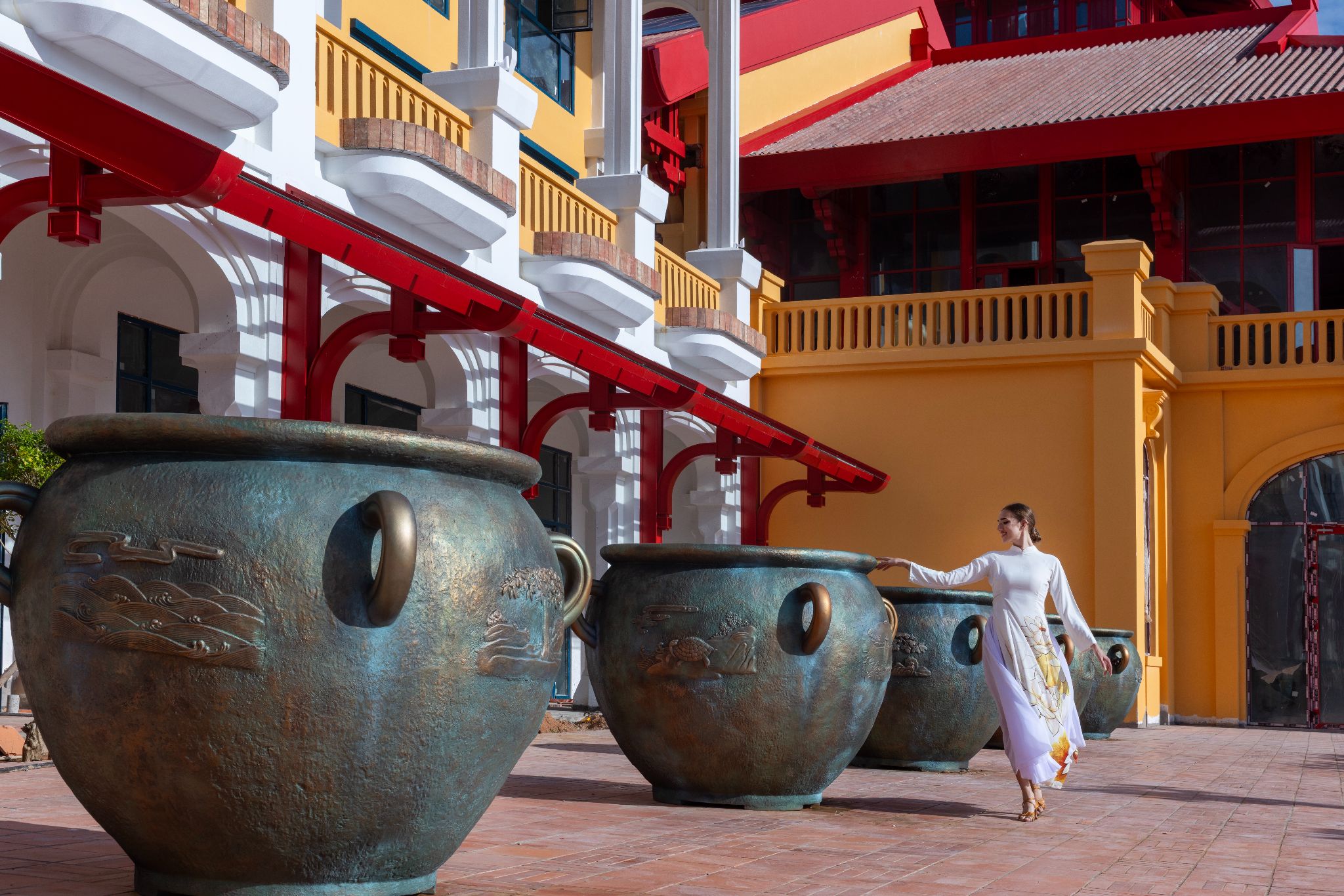
Another striking feature appears in the outdoor courtyard, where monumental bronze urns decorated with intricate carvings are carefully positioned along brick-paved terraces. Echoing the iconic bronze urns preserved within Hue Imperial City, these sculptures introduce a familiar symbol of the Nguyen Dynasty into an entirely new island setting.
The influence of Hue extends well beyond the public spaces and continues into the guest rooms, which are now beginning to take shape.
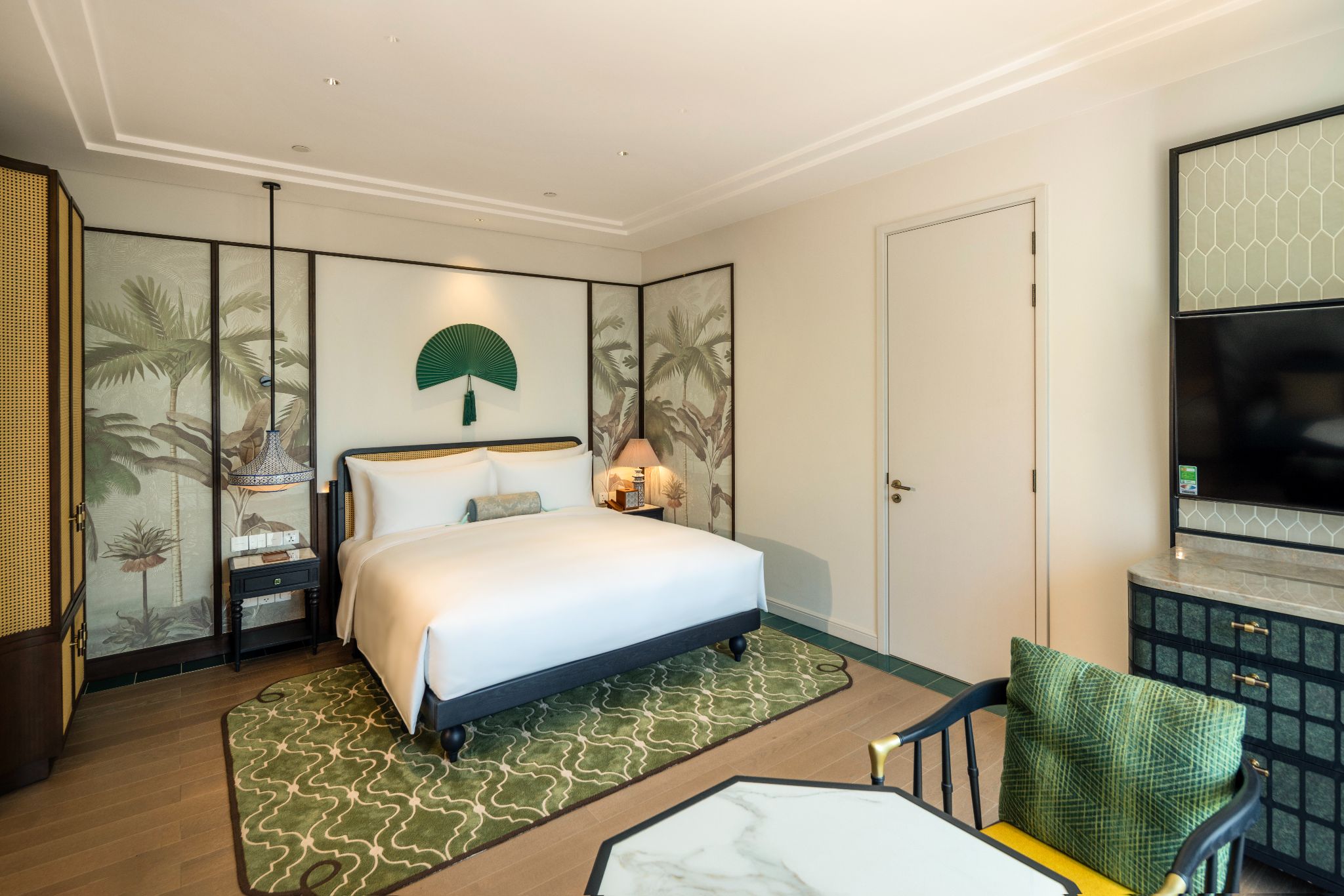
Rather than embracing the vibrant tropical colours commonly found in beachfront resorts, the interiors favour a more restrained palette of warm neutrals complemented by natural wood, woven rattan, textured fabrics and decorative accents inspired by nature. Artistic illustrations of palm trees and tropical foliage soften the walls, adding subtle character without overwhelming the space.
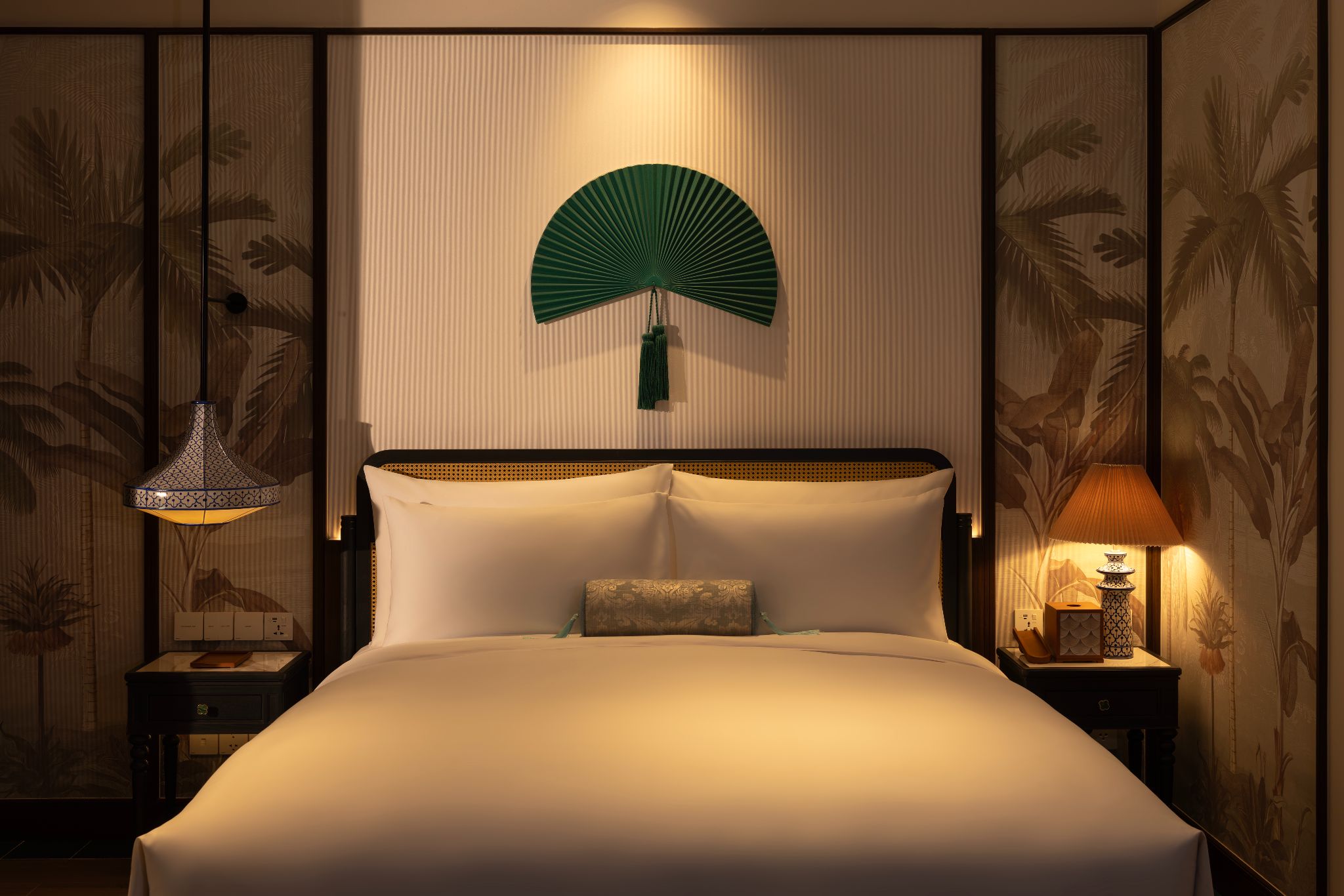
Details such as woven rattan screens, upholstered lounge chairs, pendant lighting and refined metallic trims are introduced with restraint, gently recalling the elegance of Indochine interiors and Hue's timeless sophistication without making the rooms feel overly nostalgic.
Here, the spirit of Vietnam's imperial heritage is expressed not through elaborate ornamentation but through carefully considered colours, materials and architectural details. This understated approach allows local cultural influences to coexist naturally with the contemporary comforts expected from an internationally renowned luxury resort.
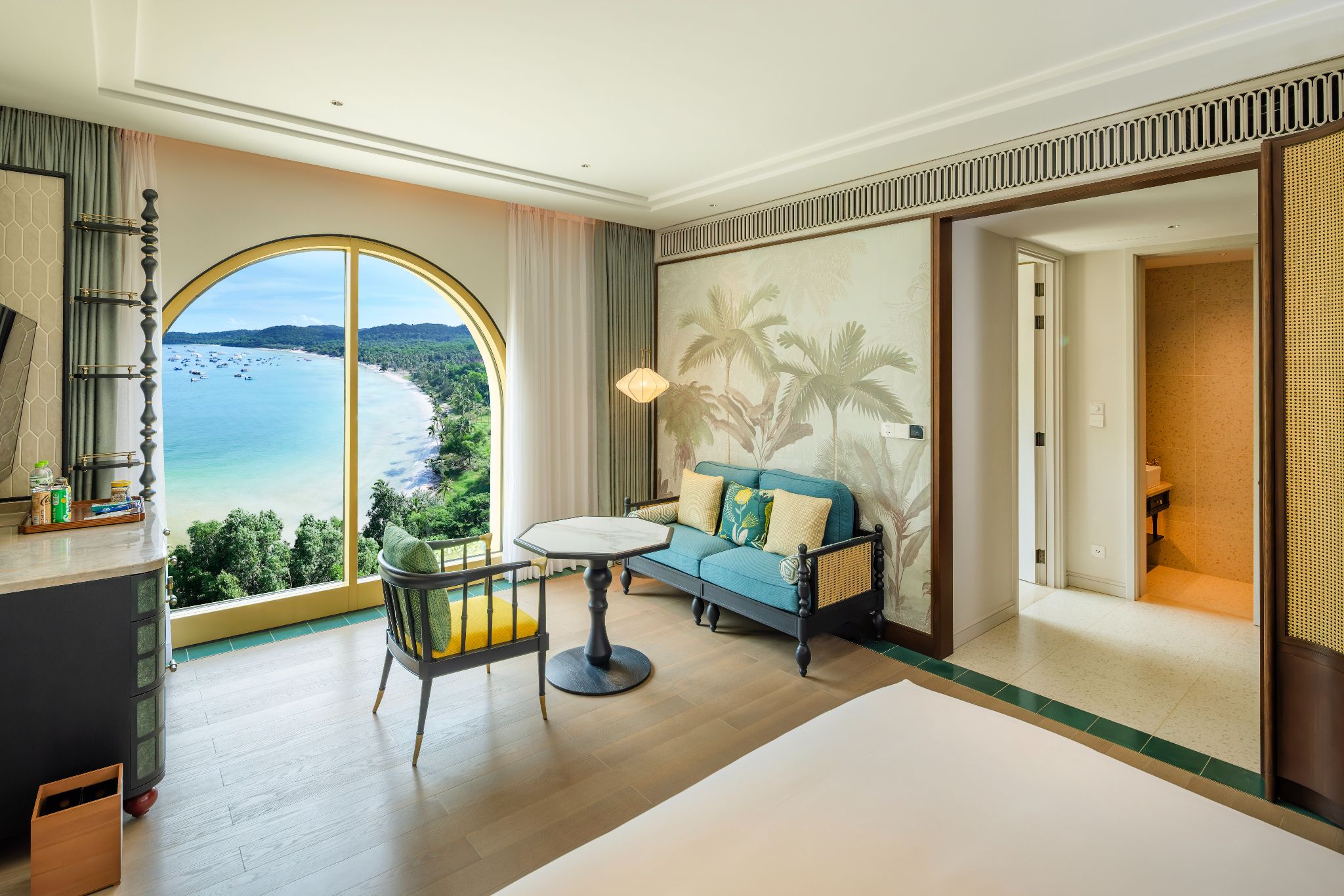
Perhaps the most captivating feature, however, lies beyond the expansive windows. From the guest rooms, Bai Tay Beach unfolds almost uninterrupted, revealing turquoise waters, lush tropical landscapes and sweeping coastal views.
Rather than serving simply as a backdrop, the scenery becomes an extension of the room itself, transforming throughout the day. Morning sunlight streams through floor-to-ceiling windows, while towards evening, the changing colours of the sea and sky blend effortlessly with the warm timber finishes and ambient lighting indoors.
From the queen's iconic headdress to the sea-sky deck
At the center of the complex, Nam Phuong Tower creates a striking visual highlight with its distinctive roof shape, inspired by Queen Nam Phuong's ceremonial headdress.
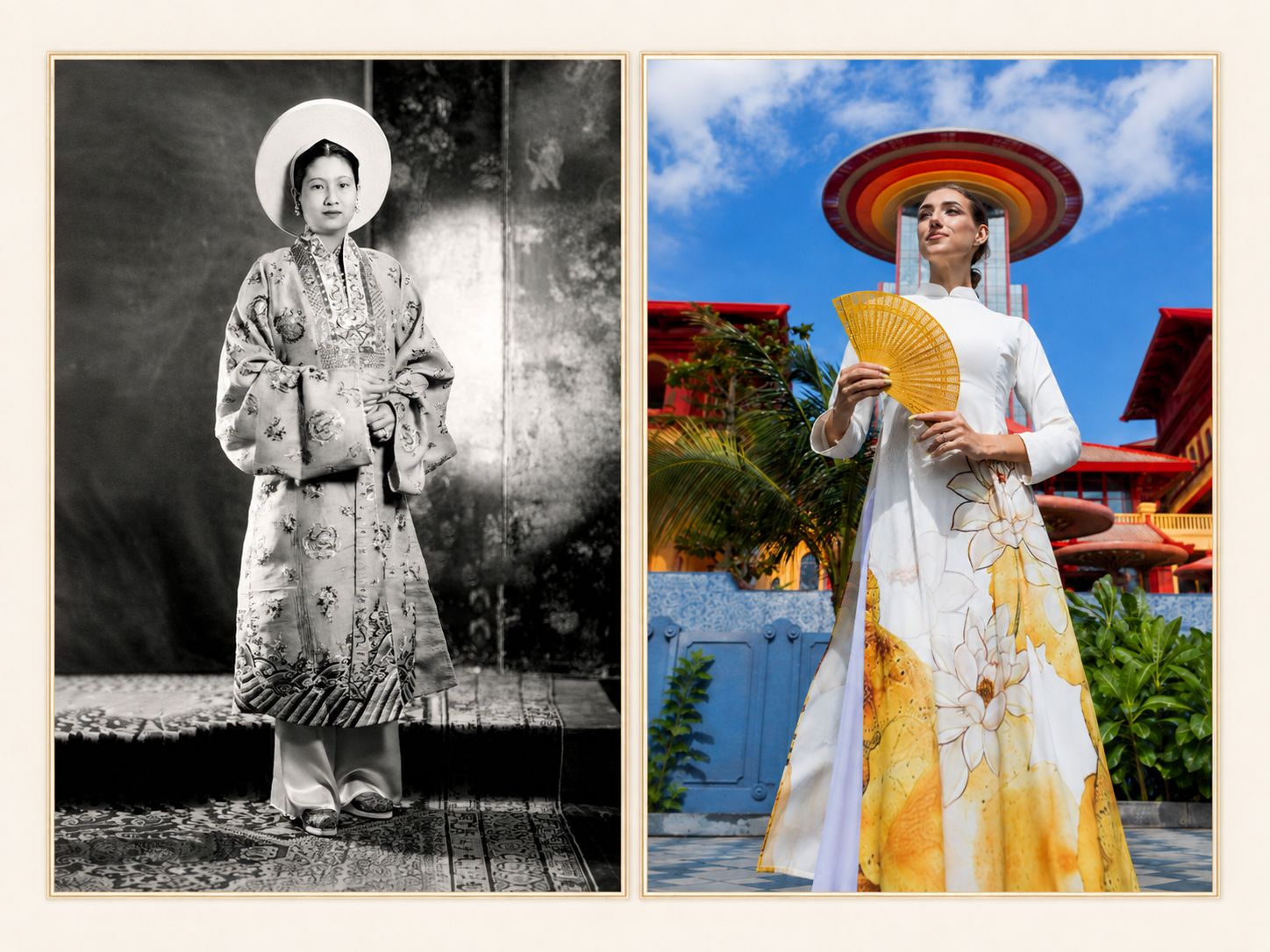
While the crimson-and-gold palette, tiled roofs, and details reminiscent of the royal court create a cultural story at the base of the structure, at the top of the tower, the shape of the ceremonial headdress becomes a unique identifying mark amidst the sea and sky of Hon Thom.
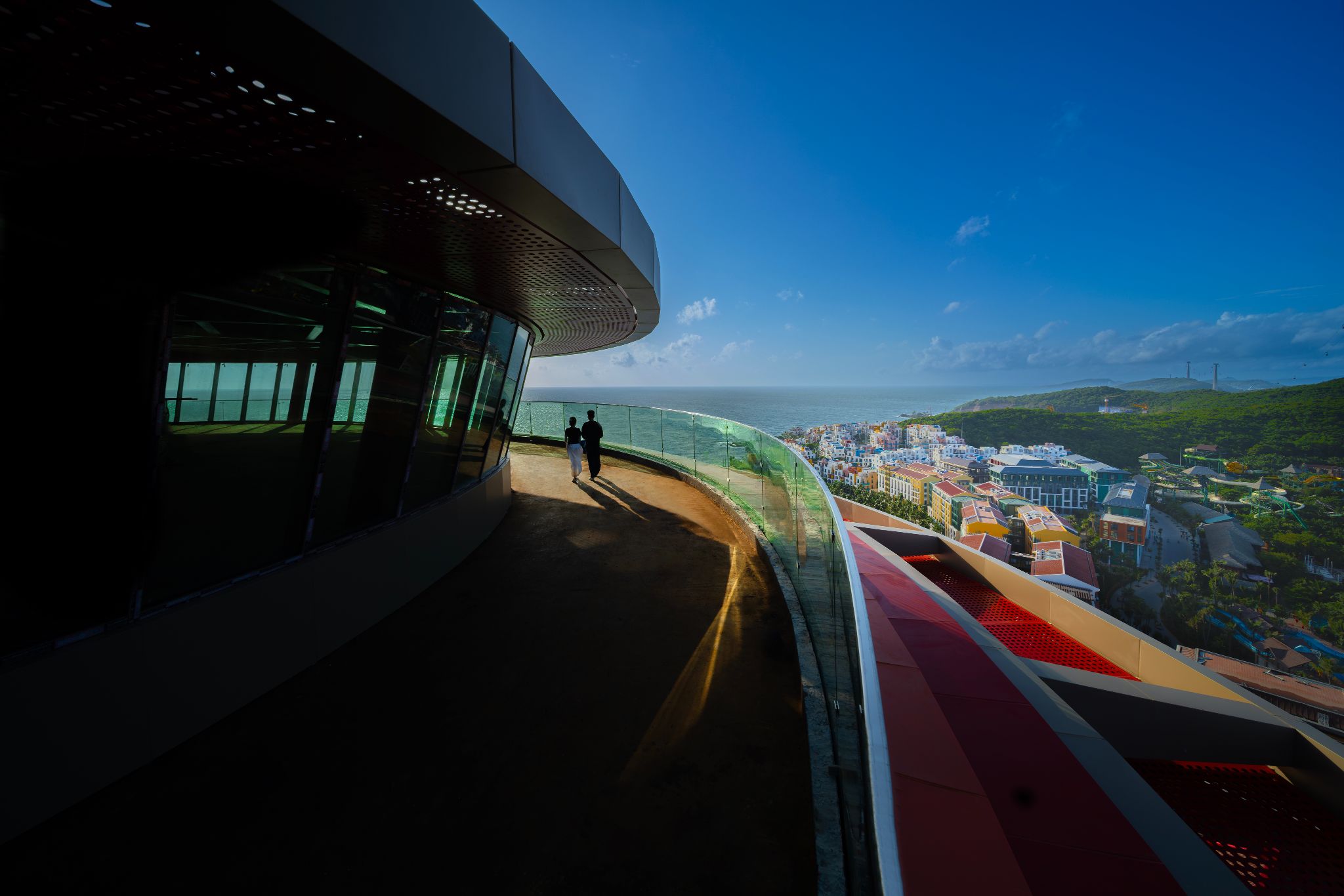
The structure does not stand in isolation but is surrounded by accommodation blocks, tiled roofs, greenery, and open spaces facing the sea. Notably, the top of Nam Phuong Tower will in the future be home to a cafe combined with a 360-degree observation deck, opening up an entirely different perspective of Hon Thom and Phu Quoc's sea and sky.
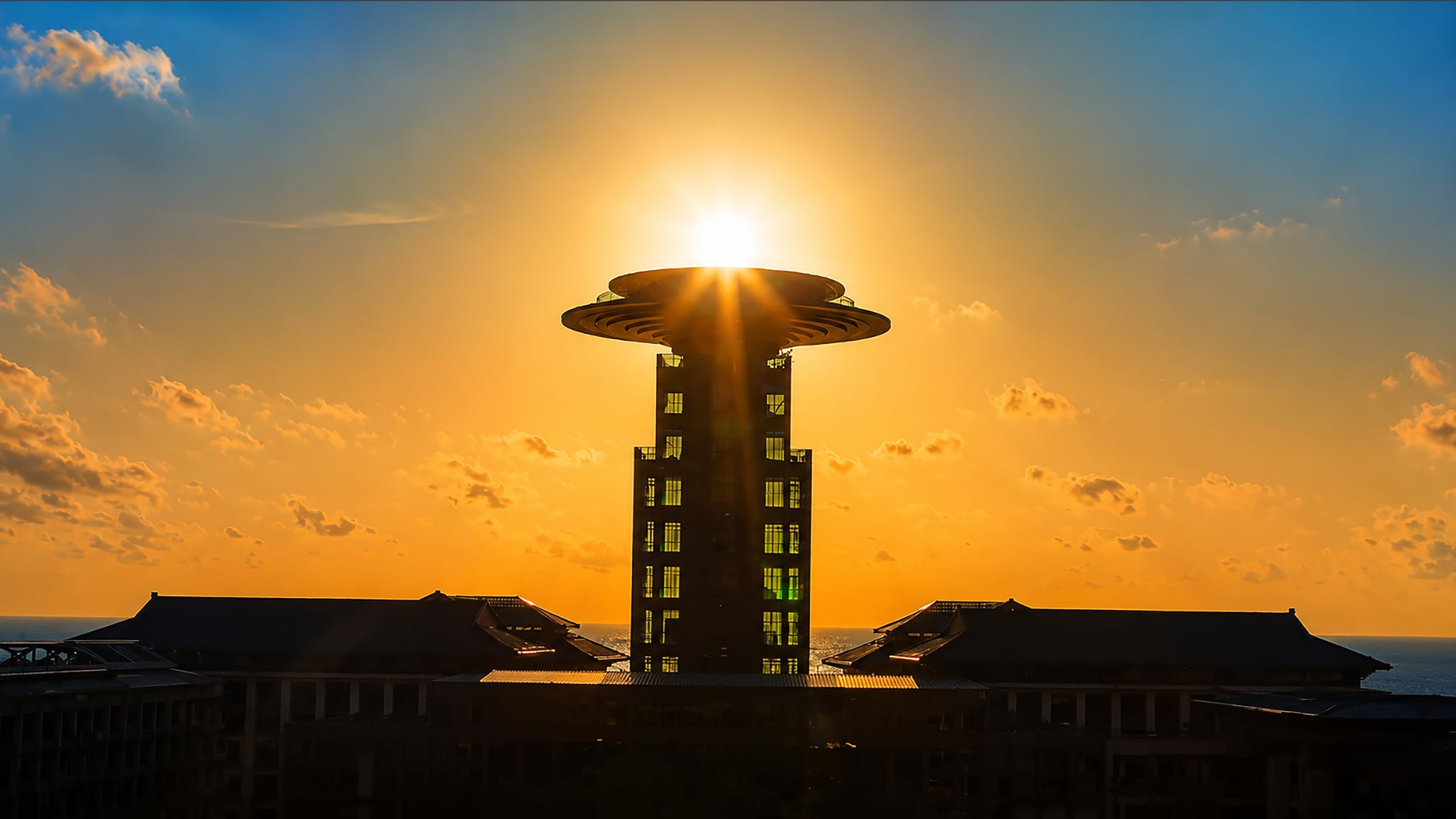
From a height of 79 meters, the view will no longer be limited to a single direction toward the sea. All four sides open up to different layers of the island's landscape: the stretching blue sea, the horizon, patches of tropical greenery, and a panoramic view of the resort complex below. This also promises to be one of the special spots to watch the sunrise, welcome the sunset, or simply capture the entire Phu Quoc sea and sky in a single frame.
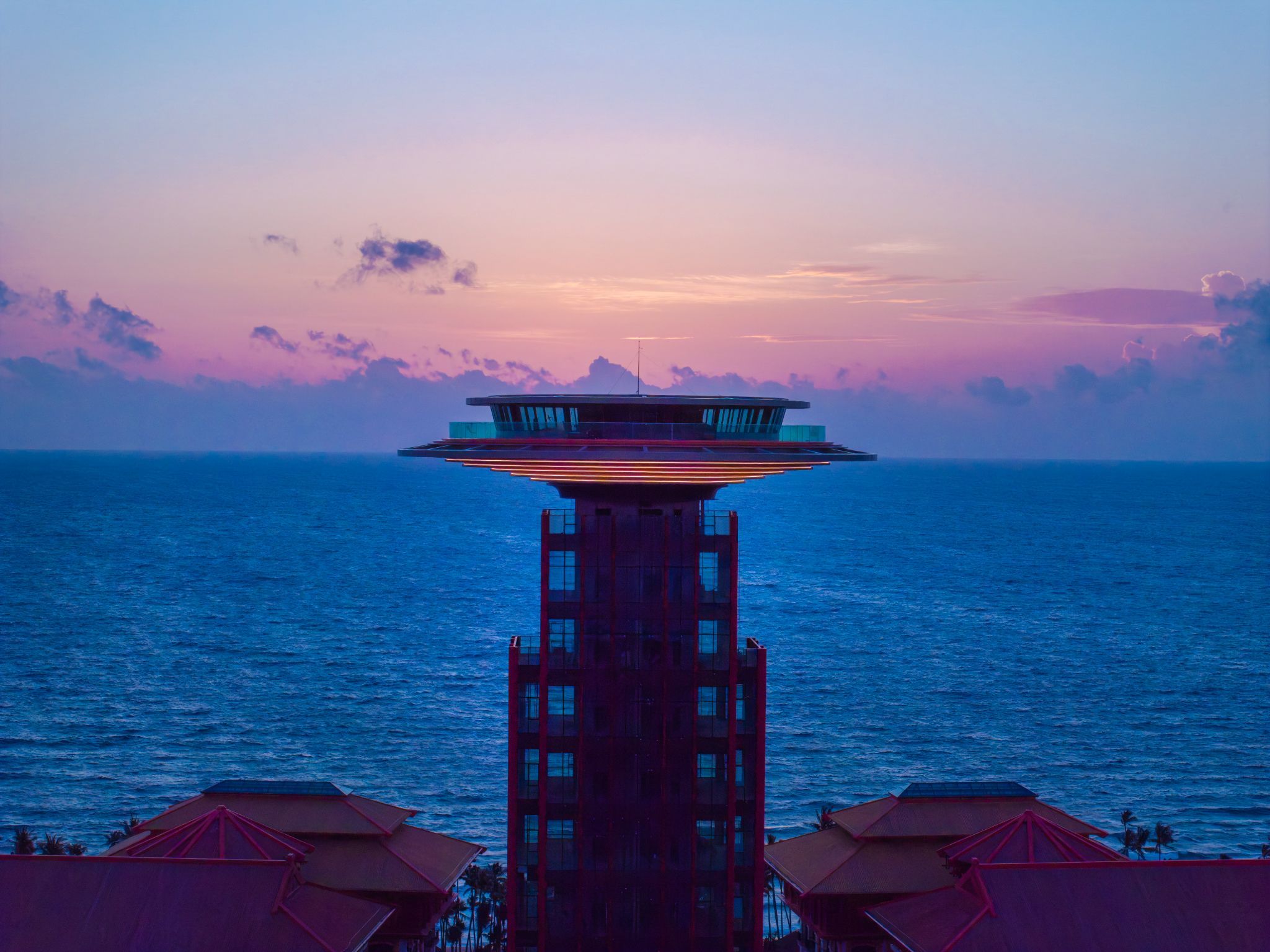
Rixos Phu Quoc has not yet officially welcomed its first guests, and the project still has finishing steps ahead. But through the revealed images – from colors reminiscent of Hue's imperial court, details inspired by Nguyen Dynasty heritage, ocean-facing rooms to the distinctive roof on Nam Phuong Tower – a new identity for the resort is gradually becoming clear.
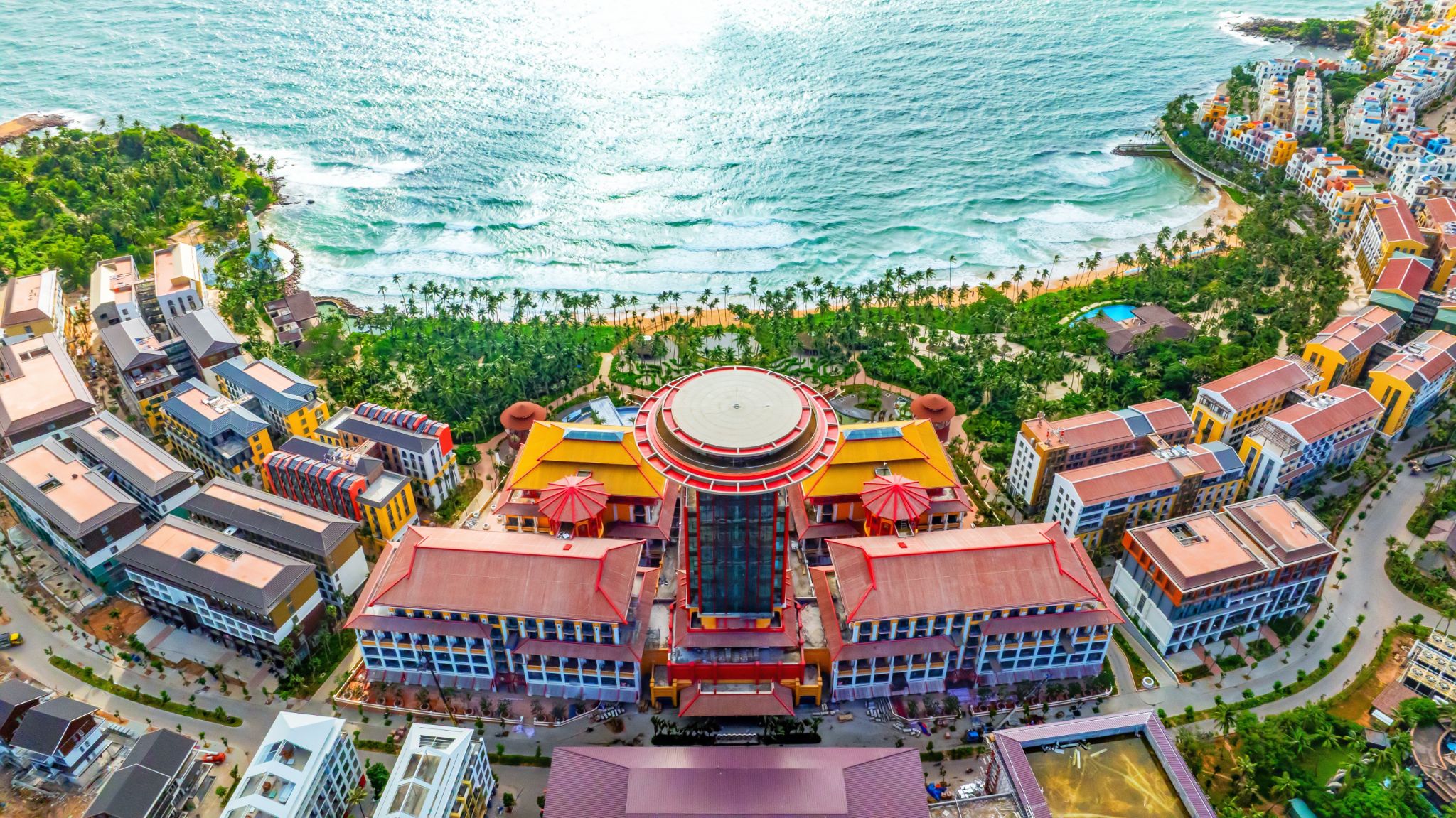
If these first images are an "introduction," then perhaps the most anticipated moment remains the time when Rixos Phu Quoc officially opens its doors to welcome guests, when the spaces being revealed today, from the rooms overlooking the sea to the 360-degree observation deck atop Nam Phuong Tower, become real experiences amidst the sea and sky of Hon Thom.